

What Size Generator Does a Museum Need for Backup? | PAVO
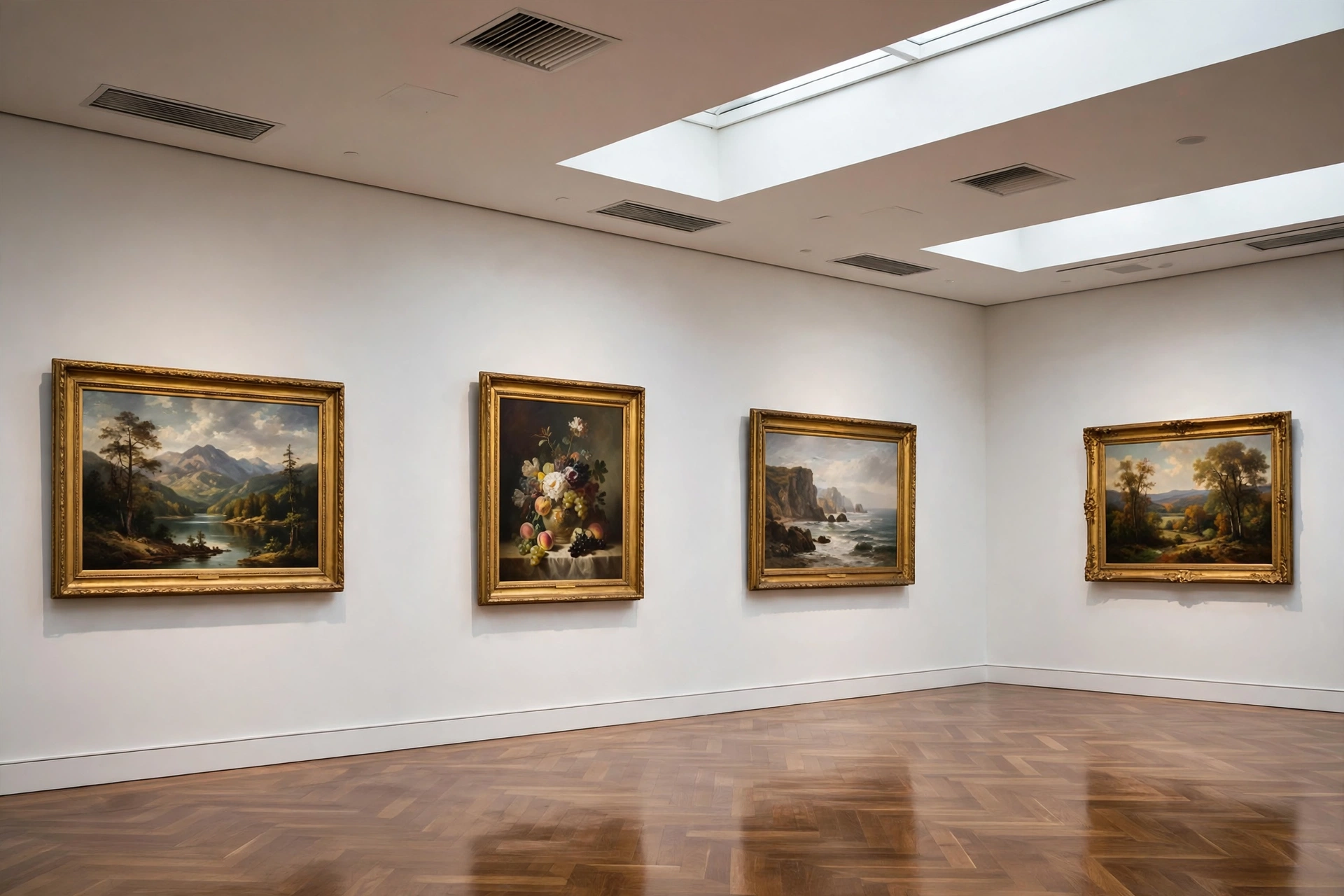
A museum is the one building where a power cut does not just stop work — it starts damage. The paintings do not wait for the grid to come back.
What size generator does a museum need? A museum needs a 60–750 kVA diesel generator, sized by floor area and HVAC load — roughly 100–250 kVA for a regional museum and 500–1,000 kVA for a national museum. The set must hold galleries at 45–55% relative humidity, keep security live, and cover chiller starting surge, not just lighting.
Contents
- What a Museum Actually Needs When the Grid Fails
- How Big: Sizing a Museum Generator by Museum Size
- The Humidity Window: Why 45–55% RH Is the Real Deadline
- The First 10 Seconds: ATS, UPS and the Security Gap
- Three Museums, Three Outages
- Fuel, Noise and Placement in a Heritage Building
- Frequently Asked Questions
- Specification Checklist: Nine Questions Before the Contract
What a Museum Actually Needs When the Grid Fails
A museum’s load list follows the collection, not the building. In a warehouse the load list is about keeping people working. In a museum it is about keeping objects stable, keeping the building secure, and keeping the public safe — in that order. A generator sized only for lights and sockets will run the café and leave the collection to drift.
The first tier is climate control. Air-handling units, chillers, humidifiers and dehumidifiers, and the building management system that coordinates them. In most museums this is the largest single load, typically 40–60% of the electrical demand on a hot or humid day. A chiller that stops does not just let the galleries warm up. It lets relative humidity climb, and humidity is the variable that does the damage. The climate plant is therefore tier one, not an afterthought, and it is the load that decides the generator size more than any other.
The second tier is security and life safety. CCTV, access control, intruder alarms, fire detection and emergency lighting. A museum that loses its cameras and alarms during a blackout is a building full of valuable, portable objects with no eyes on it. Fire detection must stay live because a generator is itself a heat source, and because a dark building with no detection is the worst possible combination. Emergency lighting and egress routes belong here too — the public still has to get out safely.
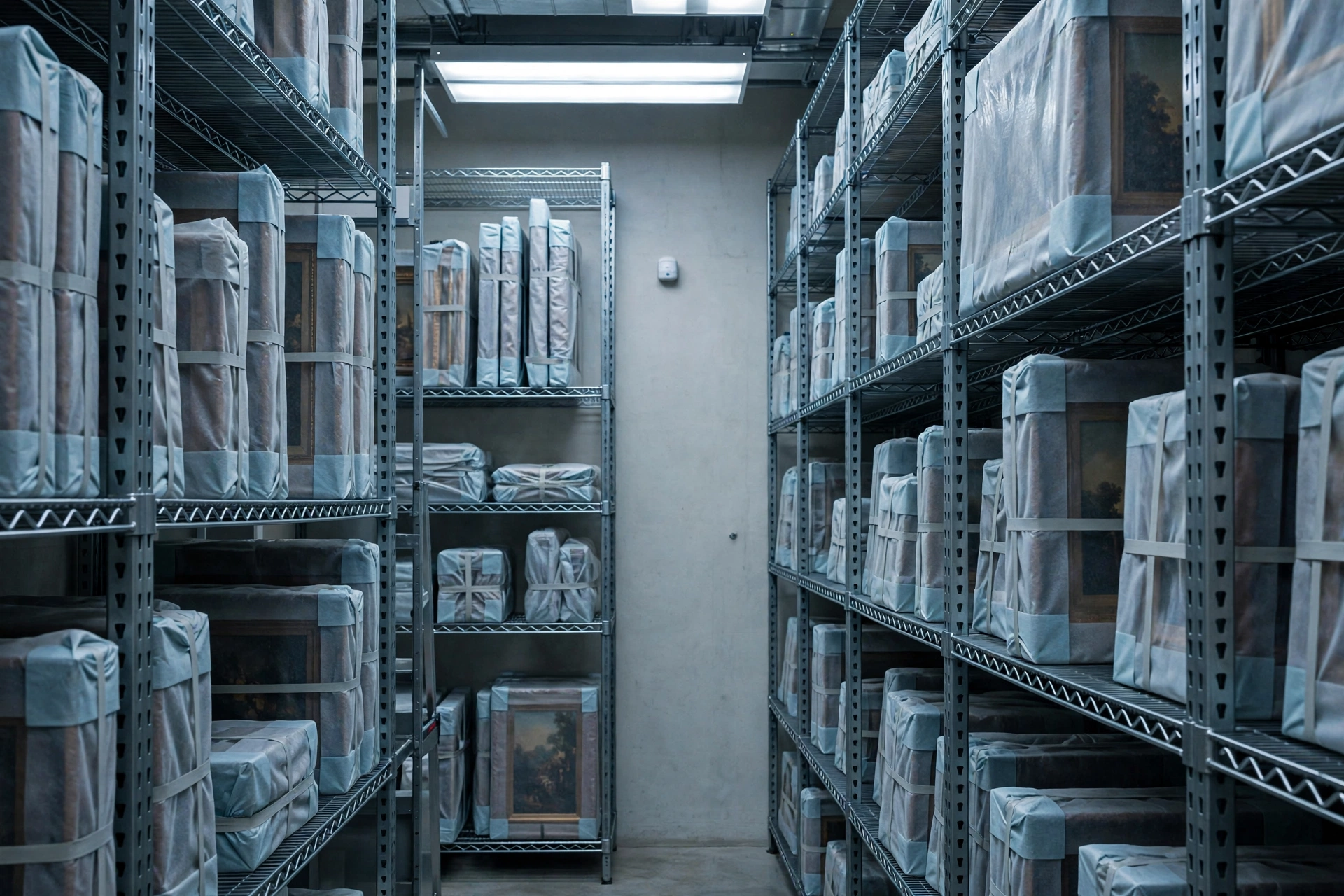
The third tier is conservation and storage. Vault HVAC, cold stores for film and photographic material, and conservation laboratories. The vault is often the most tightly controlled space in the building, and it is also the space most people forget when they write the load list. A vault that loses climate control for a day can undo a year of conservation work. The parallel with aquariums is exact: in both cases the backup power is life support, except that in a museum the life being supported belongs to objects that cannot be replaced.
The fourth tier is the public areas: gallery lighting, lifts, ticketing, the café and the shop. These matter for reopening, not for survival. A museum can stay closed for a day. It cannot let its galleries drift out of their climate band for a day and call it a minor incident.
| Load tier | What it covers | Typical share of load | Back up? |
|---|---|---|---|
| 1 — Climate control | AHUs, chillers, humidifiers, dehumidifiers, BMS | 40–60% | Yes — always |
| 2 — Security and life safety | CCTV, access control, alarms, fire detection, emergency lighting | 10–15% | Yes — always |
| 3 — Conservation and storage | Vault HVAC, cold stores, conservation labs | 10–20% | Yes — always |
| 4 — Public areas | Gallery lighting, lifts, ticketing, café, shop | 15–25% | Yes — for reopening |
| Not backed up | Café cooking, decorative fountains, retail refrigeration, non-essential IT | — | No |
Two mistakes recur in museum specifications. The first is sizing the generator for tier four and forgetting tier one — the set runs the lights while the chillers sit idle. The second is the reverse: sizing for the full connected load, including the café ovens and the fountain pumps, and paying for twice the generator the museum needs. The tier table above is the filter. Everything in tiers one to three goes on the generator. Tier four goes on the generator if the museum wants to reopen during an outage. The rest stays off.
How Big: Sizing a Museum Generator by Museum Size
Museum size is the fastest reliable guide to generator size, because floor area tracks HVAC load closely. A small local museum in a converted townhouse and a national museum with a 40,000 m² footprint are different engineering problems, and the table below gives the band each one falls into.
| Museum type | Floor area | Typical generator | What it covers |
|---|---|---|---|
| Small local museum | 1,000–3,000 m² | 60–150 kVA | AHU and split systems, security, lighting, vault |
| Regional museum | 3,000–10,000 m² | 100–250 kVA | Chiller, AHUs, humidification, security, labs |
| Large regional / national museum | 10,000–25,000 m² | 250–500 kVA | Multiple chillers, full HVAC, vaults, labs, lifts |
| National museum / museum complex | 25,000–50,000 m² | 500–1,000 kVA | Central plant, multiple wings, full public areas |
| Major museum campus | Over 50,000 m² | 1,000–3,750 kVA | Multiple sets, often paralleled, N+1 |
The bands are starting points, not answers. The generator sizing guide is the method that turns a band into a number: list every load, apply a diversity factor, convert kW to kVA at 0.8 power factor, then add the starting surge of the largest motor. A museum’s largest motor is almost always a chiller compressor or a chilled-water pump, and motor starting is where museum sizing goes wrong most often. A 22 kW chiller pump started direct-on-line draws roughly six times its running current — about 180 kVA of starting apparent power — for a few seconds. A generator that covers the running load but not the starting transient will dip, the chiller will fail to start, and the set will sit there running the lights while the galleries warm up.
A worked example makes the method concrete. Take a regional museum of 8,000 m². The load list reads: climate control 90 kW, security and life safety 35 kW, conservation labs and vault 25 kW, public areas 20 kW. Total running load is 170 kW. With a diversity factor of 0.85 — not everything runs at once — the continuous load is 145 kW, which at 0.8 power factor is 181 kVA. The largest motor is a 22 kW chilled-water pump. Starting it direct-on-line needs about 180 kVA of transient capacity on top of the other running load. The candidate set is therefore a 250 kVA standby-rated unit: it covers the 181 kVA continuous load with margin, and it has the transient capacity to start the pump without dropping voltage below the level the chiller controls will accept. Fitting a soft starter or a variable-frequency drive to that pump would cut the starting surge by two-thirds and let a 200 kVA set do the same job — a real saving, and one worth pricing before buying the larger set.
The rating matters as much as the number, and standby and prime ratings are different promises: a standby-rated set is built for emergency duty, typically limited to around 200 hours a year with no overload allowance, while a prime-rated set is built for unlimited hours at variable load with a 10% overload allowance. A museum that expects its generator to run through a 72-hour storm outage, and then again through the next one, should check the rating on the datasheet rather than assuming the headline kVA figure applies. The same rule applies to universities with campus museums: match the rating to the duty, not to the catalogue headline.
One more sizing rule applies to museums more than to most buildings. Loan agreements. A museum that borrows works from other institutions signs conditions that specify the climate band — typically 45–55% RH and 18–22 °C, logged continuously. A generator that cannot hold that band is not just a technical failure. It is a breach of the loan conditions, and a lender that finds out will not lend again.
The Humidity Window: Why 45–55% RH Is the Real Deadline
Ask a conservator what kills a collection and the answer is rarely temperature. It is humidity, and more precisely the swing in humidity. A constant 55% RH does far less damage than a cycle that swings between 40% and 70%, even though the average is the same. Paper, canvas, wood, ivory and textiles are hygroscopic: they absorb moisture from the air and release it again, expanding and contracting with every swing. Each cycle works the material. Paint cracks along the canvas weave. Wood veneer lifts. Ivory splits. Gilding flakes. The damage is cumulative and, once done, cannot be reversed.
The standard the industry works to is ASHRAE Handbook 2019, Chapter 24, which sets out five classes of control for museums, galleries, archives and libraries. Class AA is the tightest: 50% RH ±5% with seasonal temperature drift of ±2 °C. Class A allows short-term RH shifts of ±10%. Class B allows 40–60% RH with seasonal drift. Class C allows 25–75% RH below 30 °C. Class D only requires RH below 75%. The American Institute for Conservation gives the same target in plain language: a set point in the range of 45–55% RH with an allowable drift of ±5%, giving a total annual range of 40% minimum to 60% maximum, and a temperature range of 59–77 °F (15–25 °C). ISO 11799:2015, the standard for document storage, sets 35–60% RH and 14–22 °C, with fluctuations not exceeding ±5% RH or ±2 °C in any 24-hour period.
| ASHRAE class | Relative humidity | Temperature | Where it is used |
|---|---|---|---|
| AA | 50% ±5%, seasonal drift ±2 °C | 20 °C set point | National collections, loan galleries |
| A | 50% ±10% short term | 15–25 °C | Major museums, mixed collections |
| B | 40–60% seasonal | 15–25 °C | Regional museums, robust collections |
| C | 25–75% | Below 30 °C | Historic houses, open structures |
| D | Below 75% | Below 30 °C | Basic protection, mould prevention |
The numbers are not arbitrary. Above roughly 65–70% RH, mould spores germinate and metal corrosion accelerates. Below roughly 30% RH, wood veneer, ivory and lacquer become brittle and crack. And the rate of chemical decay roughly doubles for every 5 °C rise in temperature, so a gallery that warms from 21 °C to 31 °C during a summer outage is ageing its paper and textiles twice as fast while it waits for the power to return. The 45–55% band is a compromise: cool and dry enough to slow decay and stop mould, humid enough that organic materials do not dry out and crack.
Different materials fail in different ways, and the table below is the one a museum’s facilities team should keep next to the generator specification.
| Material | Safe RH band | What goes wrong outside it |
|---|---|---|
| Oil on canvas | 45–55% | Craquelure, paint flaking, canvas slackening |
| Wood and furniture | 45–60% | Warping, veneer lifting, joints opening |
| Paper and parchment | 45–55% | Embrittlement, cockling, acid hydrolysis |
| Ivory and lacquer | 50–60% | Cracking below 40% RH |
| Metals, archaeological iron | Below 35% | Active corrosion above 60% RH |
| Photographs, film | 30–40% | Binder hydrolysis above 60% RH, fading |
The clock starts the moment the climate plant stops. A heavy masonry museum holds its temperature for hours — the walls are a thermal battery — but relative humidity drifts faster than temperature, because every door opening, every visitor’s breath and every litre of infiltrating damp air adds moisture that no longer has a dehumidifier to remove it. A sealed gallery with a tight envelope can hold its band for 4–6 hours. A modern glass-roofed atrium, or a historic building with single glazing and leaky windows, can leave the band in under two hours. Conservators therefore treat 4–6 hours as the point where a sealed gallery starts to leave its loan band, and 24 hours as the point where the damage stops being theoretical. After 72 hours without climate control, a mixed collection in a humid climate is not at risk — it is being damaged, and the conservation bill will run into five figures before a single object is restored.
That is why the generator is a conservation instrument, not just a power supply. The set does not have to run the whole museum. It has to run the climate plant, and it has to do it before the galleries leave the band. A museum that waits for a hire generator to arrive on a lorry has already lost the window. A museum with a permanently installed set, tested monthly, has not.
The First 10 Seconds: ATS, UPS and the Security Gap
A diesel generator does not start instantly. The grid fails, the automatic transfer switch senses the loss, the engine cranks, the set reaches speed and voltage, and the switch transfers the load. Under NFPA 110, a Level 1 system — the classification that covers life safety — must restore power within 10 seconds (Type 10). Ten seconds sounds short. In a museum it is long enough for the CCTV system to drop, the access-control readers to go dark, the fire panel to lose its mains supply, and the building management system to reboot. Ten seconds of darkness in a building full of portable, valuable objects is a security incident waiting for someone to notice it.
The answer is a UPS that bridges the gap. CCTV recorders, access-control panels, intruder alarms, the fire panel and the BMS sit on battery-backed power, typically 15–30 minutes of runtime, which is far more than the 10 seconds the generator needs. The UPS is not there to run the museum. It is there to make sure nothing blinks while the generator takes over. A museum that sizes its UPS only for the IT servers and forgets the security desk has built a gap exactly where a thief would look for one.
The New Orleans Museum of Art showed what the system looks like when it works. When Hurricane Ida made landfall on 29 August 2021, the city lost power for days. The museum’s emergency generators ran through the outage to hold temperature and humidity steady, and the collection came through without damage. The museum stayed closed until the grid returned, but the building never left its climate band. That is the standard a museum generator is judged against: not whether the lights stayed on, but whether the collection stayed in its band.
Two details decide whether the 10 seconds pass safely. The first is the door schedule. Egress doors must fail safe — they release on power loss so the public can get out — while vault and store doors must fail secure, so the collection stays locked in. A museum that gets this backwards has either trapped its visitors or opened its vaults. The second is the chiller restart sequence. When the generator takes the load, the chillers should restart in sequence, not all at once, or the combined starting surge will trip the set. The BMS should be programmed to stage the restart, with the largest compressor last. Both details belong in the specification, not in a post-outage debrief.
Three Museums, Three Outages
Stark Museum of Art, Orange, Texas — Hurricane Rita, 2005
The Stark Museum of Art holds a collection of American Western art worth more than $200 million — paintings by Georgia O’Keeffe and Thomas Moran, sculptures by Frederic Remington, Native American baskets, clothing, rugs and pottery — in a two-storey, 42,000 sq ft steel-encased building in Orange, Texas. When Hurricane Rita tore through south-east Texas in September 2005, the storm breached the building’s envelope, water got in, and the area lost power. The museum could no longer control temperature or humidity inside the galleries.
The response was a temporary climate plant. The Stark Foundation called Munters Moisture Control Service, and technicians arrived the next morning with five desiccant dehumidifiers, air scrubbers and direct-expansion air conditioning. The curator’s target was 70–74 °F with 42–48% RH, and the equipment held it. The collection survived. The lesson is the cost of the alternative: a hire fleet of dehumidifiers, a specialist contractor flown in, and a building that had already spent a night out of its band. A permanently installed generator, tested monthly, would have held the same band without the phone call, the transport delay or the risk. The Stark case is the one museum directors quote when they ask why a generator is worth the capital cost. The answer is in the collection valuation: $200 million of art, protected by five hire dehumidifiers and a day’s luck.
Albany Museum of Art, Georgia — Hurricane Michael, 2018
The Albany Museum of Art lost power when Hurricane Michael, a Category 4 storm, crossed south-west Georgia on 10 October 2018. The building took minor water damage, but the director’s first concern was not the water. It was the loss of power, because without electricity the museum could not control humidity. Two exhibitions were on the walls and a third was being installed. The museum evacuated the works on the grounds of humidity risk and called The Conservation Center in Chicago, whose disaster-response team arrived on the Friday and finished its work on the Saturday.
The museum reopened on 23 October 2018, thirteen days after the storm, with no severe damage to the collection. The evacuation worked, but it worked because the museum had an off-site store to evacuate to, a conservation team willing to travel, and a collection small enough to move. A national museum with 100,000 objects cannot evacuate its galleries in a day. For a large collection, the only evacuation that works is the one that never has to happen — the generator that keeps the climate plant running so the objects stay where they are.
Albany had already learned the lesson once. In January 2017, two storms breached the roof and forced the museum to close for nine months while repairs were made. The permanent collection had been stored off-site since that storm, which is why none of it was at risk when Michael struck. A museum that has already moved its collection once knows the price of the second move. Backup power is cheaper.
Ohio History Center, Columbus — Derecho, June 2012
The Ohio History Center lost power on the evening of Friday 29 June 2012, when a derecho with winds up to 80 mph tore through Columbus and central Ohio. Power was not restored until very early on Monday morning — roughly 60 hours without electricity. In the archives stacks the centre holds about 120 cubic feet of nitrate-based film in a bank of six freezers, normally held at 0 °F. The freezers were not connected to the backup generator.
Staff checked the freezers on Saturday morning and found condensation puddling on the packages. The collections were wrapped in polyethylene bags and stayed dry, but on Monday morning only four of the six freezers had restarted when power returned. The two that had not were dripping water, and the temperature inside them had reached 40 °F. Staff dried the packages, moved them to a microfilm vault, repaired the freezer blowers, and returned the film once the freezers were back at 0 °F. Nothing was lost. The centre’s own account of the weekend ends with a sentence every museum facilities manager should read twice: they were discussing the possibility of purchasing a generator for the freezers, and if the power had been off longer, they would have had to move the collections to a walk-in freezer on campus.
The Ohio case is the most instructive of the three, because the museum had a generator — it just had not connected the freezers to it. The load list had been written for the building, not for the collection. A freezer bank holding nitrate film is a conservation load, and it belongs in tier three of the load list alongside the vault HVAC. The cost of connecting it is a cable and a breaker. The cost of not connecting it is a weekend of drying packages and a collection that came within hours of real damage.
Fuel, Noise and Placement in a Heritage Building
A museum generator is sized by load, but it runs on fuel, and the fuel question is a runtime question. The table below uses the Cummins C500D5 — a 500 kVA standby / 455 kVA prime set, the class of machine a large regional museum would install — to show what different loads cost in litres.
| Load on a 500 kVA set | Fuel use | Fuel for 24 hours | Fuel for 72 hours |
|---|---|---|---|
| 25% (125 kVA) | 29.2 L/h | 700 L | 2,100 L |
| 50% (250 kVA) | 49.0 L/h | 1,176 L | 3,528 L |
| 75% (375 kVA) | 69.9 L/h | 1,678 L | 5,033 L |
| 100% prime (455 kVA) | 93.2 L/h | 2,237 L | 6,710 L |
A museum that wants 72 hours of autonomy at 75% load needs just over 5,000 litres of usable fuel on site, plus a margin for the fuel the set burns during its monthly test. That is a 5,000-litre bulk tank, or a 1,000-litre day tank with a 4,000-litre bulk tank feeding it. The tank should be bunded to 110% of its capacity, and the fuel should be tested and polished on a schedule, because diesel left standing in a tank goes bad. The failure mode that kills museum generators most quietly is diesel fuel ageing: the set starts, runs for twenty minutes on degraded fuel, and stops. A museum that tests its fuel twice a year and polishes it when the water content rises will never meet that failure. A museum that does not will meet it during the storm.
Noise is the second constraint, and in a museum it is stricter than in a factory. A silent canopy set measures roughly 65–70 dB(A) at 7 metres; a gallery is designed for a background of 35–40 dB(A). The set cannot sit next to the gallery wall and meet both numbers. The answer is distance, screening and acoustic louvres: place the set at least 20 metres from the gallery façade where the site allows, screen it with a wall or planting that breaks the line of sight, and fit acoustic louvres on the plant-room intake and discharge. The same problem faces hotels, where a generator that wakes the guests is a generator that gets switched off, and the solution is the same: distance first, attenuation second, and never a bare open set beside a room people sit in quietly.
Placement in a heritage building adds a third constraint. A listed museum cannot be drilled, cut or bolted the way a new-build plant room can. The generator plinth, the flue route, the fuel-tank bund and the cable runs all need consent, and the consent process takes months. The practical answers are: put the set outside, on its own plinth, screened by planting or a low wall, rather than inside a historic basement; route the flue vertically, away from air intakes and above the roofline, so exhaust never enters the galleries; isolate the set on anti-vibration mounts so the building fabric never feels it; and keep the fuel tank in a separate bunded enclosure, away from the collection stores. A museum that plans the placement with the conservation team, not just the electrical contractor, avoids the two most common outcomes: a set that cannot be installed because consent was refused, and a set that was installed in the wrong place and vibrates the gallery floor.
Frequently Asked Questions
What size generator does a museum need?
A museum needs a 60–750 kVA diesel generator, sized by floor area and HVAC load. A small local museum typically needs 60–150 kVA, a regional museum 100–250 kVA, and a national museum 500–1,000 kVA. The set must cover the climate plant and the starting surge of the largest chiller motor, not just lighting and sockets.
Do museums need a backup generator?
Yes, if the collection matters. A museum without backup power loses climate control, security and fire detection the moment the grid fails, and a gallery can leave its 45–55% RH loan band within hours. Museums that lend and borrow works are often required by loan agreements to prove continuous climate control. A generator is the only way to prove it during an outage.
How long can a museum run on a generator?
As long as the fuel lasts. A 500 kVA set at 75% load burns about 70 L/h, so a 5,000-litre tank gives roughly 72 hours of runtime. The practical limit is the standby rating — typically around 200 hours a year — and the fuel delivery schedule. Museums in storm-prone regions should plan for 72 hours of on-site fuel and a delivery contract that covers the next 72.
What happens to a museum during a power outage?
The climate plant stops, relative humidity starts to drift, CCTV and access control go dark unless a UPS bridges the 10-second gap, and the building closes to the public. In the short term the collection is safe if the outage lasts a few hours and the building is well sealed. After 24–72 hours without climate control, humidity damage to paintings, wood and paper becomes real, and loan conditions are breached.
Can a diesel generator power a museum?
Yes, and it is the standard answer for museums that cannot accept a climate gap. A diesel set powers the climate plant, security, vault HVAC and lighting, and it runs for as long as fuel is available — days, not hours. The set must be sized for chiller starting surge, fitted with an automatic transfer switch, and tested monthly under load. A generator that has never been tested under load is a rumour, not a plan.
Specification Checklist: Nine Questions Before the Contract
1. What is the load list, by tier? Climate control, security, conservation stores and public areas, each with running kW. If the supplier cannot show the tier table, the sizing is a guess.
2. What is the largest motor, and how does it start? Chiller compressor or chilled-water pump, direct-on-line or soft start. The starting surge decides the set size more than the running load does.
3. Which rating — standby or prime? A set that will run 72-hour storm outages needs a prime rating or a standby rating with the hours to match. Check the datasheet, not the catalogue headline.
4. Does the set hold the loan band? The generator and climate plant together must hold 45–55% RH and 18–22 °C continuously. Ask for the calculation, not a promise.
5. What bridges the 10 seconds? A UPS for CCTV, access control, fire panel and BMS, with 15–30 minutes of runtime. Confirm the UPS load list covers security, not just IT.
6. How many hours of fuel are on site? 72 hours at the expected load is the planning figure for storm regions. Confirm the tank size, the bund, and the delivery contract.
7. What is the noise level at the gallery façade? A silent canopy at 65–70 dB(A) at 7 metres still needs distance and screening to meet a 35–40 dB(A) gallery background. Ask for the calculation at the façade, not at the set.
8. Where does the set sit, and who consented? Outside on its own plinth is usually better than inside a historic basement. Confirm listed-building consent, flue routing and vibration isolation before ordering.
9. What is the test regime? Monthly run under load, annual full-load test, fuel testing twice a year. A museum that tests its generator monthly will find its faults on a Tuesday, not during a hurricane.
A museum does not buy a generator for the days the grid works. It buys one for the night the grid fails, the humidity climbs, and the collection — the one asset that cannot be replaced at any price — depends on a machine in the garden. Size it for the climate plant, test it under load, keep fuel in the tank, and the collection will never know the grid went down. To size a set for a specific museum, contact PAVO with the floor area, the chiller schedule and the loan conditions, and the engineering team will return a load list and a generator specification.