

What Size Generator Does an Aluminium Smelter Need? | PAVO
An aluminium smelter is the one industrial site where a power cut is not an inconvenience. It is a countdown to frozen metal, cracked cathodes and a restart measured in months.
What size generator does an aluminium smelter need? A potline drawing 200–500 MW cannot be backed up by diesel, so the answer is not one number: a 250,000-tonne smelter typically needs 2,000–3,500 kVA of standby diesel for the cooling, casting, crane and control loads that keep the pots alive until grid power returns.
Contents
- The Honest Answer First: A Diesel Generator Cannot Power a Potline
- What Happens to an Aluminium Potline During a Power Outage
- Three Smelters, Three Outages
- Sizing the Generator: The Loads That Must Not Stop
- Fuel Autonomy: How Long the Set Can Hold the Line
- Rectifiers, Harmonics and Placement
- Frequently Asked Questions
- Specification Checklist: Six Lines Before the Deposit
The Honest Answer First: A Diesel Generator Cannot Power a Potline
Every other article in this series starts with sizing. This one starts with a limit, because the limit decides everything else. An aluminium smelter is not a big factory with a big generator. It is a chemical process that happens to consume electricity on a scale most engineers never meet in any other industry.
How much power a potline actually draws
Primary aluminium is made by the Hall-Héroult process: alumina dissolved in molten cryolite, held at roughly 950–960°C, with a direct current of 300–500 kA driven through each potline. A modern cell runs at 3.9–4.5 V; with 300 pots connected in series, a single potline operates at 1,200–1,350 VDC, and newer lines run at 1,500–1,850 VDC. The grid connection is at 132, 220 or 380 kV.
The energy figure is what stops the conversation. A tonne of primary aluminium needs 13,000–13,500 kWh of alternating current at the potline, and efficient smelters run at roughly 13 MWh per tonne. Electricity is 30–40% of the total cost of making the metal. Work the arithmetic for a mid-size plant: 250,000 tonnes a year at 14 MWh per tonne is 3.5 TWh a year, or about 400 MW drawn continuously, day and night, 8,760 hours a year. A large smelter draws 500–700 MW. The biggest single-site smelters pass 1 GW.
No diesel generator set, and no practical number of them, backs up 400 MW. A 3,750 kVA containerised set — the largest single unit PAVO builds — delivers 3,000 kW. Backing up a 400 MW potline would take more than 130 of them, plus the switchgear, fuel storage and synchronising plant to run them in parallel, at a capital cost several times the smelter itself. That is not a specification. It is a category error.
What the generator is really for
The generator in a smelter does a different job, and it is a job worth doing properly. When grid power fails, the potline stops. Nothing changes that. What the generator decides is whether the potline stops safely, whether the metal already in the pots survives, and whether the plant can restart in days rather than months.
The loads that matter after an outage are small compared with the potline, and they are the loads this article sizes. Rectifier cooling water and potline cooling systems keep the electrical equipment that will restart the line from destroying itself. Casting furnaces and holding furnaces keep molten metal liquid long enough to be tapped or safely frozen in a controlled way. Cranes move ladles and hot metal to safe positions. Gas treatment plant fans keep fluoride fumes out of the potrooms. Compressed air keeps the pot tending machines and pneumatic controls working. Control rooms, PLCs and the potline control system keep the operators in command of the sequence. Emergency lighting, gas detection and fire pumps keep people safe while the plant is in an abnormal state.
A smelter that buys its generator on the wrong basis — one set sized to a guessed percentage of total load, or a set that can run the offices and the canteen — has bought nothing useful. A smelter that sizes from the critical-load list, with the potline damage window in mind, has bought the difference between a restart and a rebuild.
What Happens to an Aluminium Potline During a Power Outage
A potline is a row of electrolytic cells held at 950°C by the current passing through them. The current is the heat source. Stop the current and the cells start cooling immediately, at the same rate they dissipate heat during normal operation. The bath — molten cryolite with dissolved alumina — begins to lose temperature from the moment the rectifiers trip. What follows is a sequence with hard thresholds, and the thresholds are measured in hours, not days.
The first three hours
Research published by Tabereaux in 2022 puts the first threshold plainly: electrical power outages lasting more than three hours in aluminium smelters often result in shutting down all the cells in a potline. In the first hour, the bath cools toward 940°C. Anode effects multiply. The frozen ledge on the cell walls thickens and the ridge of solidified bath grows. Potroom crews can work the cells — feeding alumina, adjusting anodes, managing the crust — but they are fighting a cooling curve, not a stable process.
A generator that starts in 10 seconds and carries the cooling-water pumps, the gas treatment fans and the potroom cranes buys the crew those three hours in an orderly plant. A generator that takes 30 minutes to start, or that trips on the first motor start, does not. The difference between a 10-second start and a 30-minute start is not a specification detail. It is the difference between a potline that restarts and a potline that shuts down.
The 24-hour freeze
Below 900°C, a large volume of liquid bath freezes. Bath height falls and anode immersion drops. The cells that freeze solid — the bath reaching the 660°C melting point of aluminium — cannot simply be switched back on. When power is restored to a partially frozen potline, the electrical resistance of the frozen bath is far higher than normal, potline voltage rises sharply, and rectifiers trip out on overload from the combination of high resistance and the anode effects that follow. Restart then becomes a cell-by-cell operation, with crews working down the line, heating and re-energising one pot at a time.
Thermal modelling presented at ICSOBA in 2020 quantified the damage. After 24 hours of cooling, the thermo-mechanical stress generated at the top surface of the cathode panel exceeded 11 MPa — against a cracking threshold of around 8 MPa. The cathode lining cracks. Modern cells, built with more thermally conductive cathode materials, lose heat faster than older designs and are at higher risk of shutting down from a power interruption. The damage is irreversible and non-repairable: cooling cracks in the cathode blocks and in the rammed seams between them shorten pot life permanently.
Cathode damage that outlasts the outage
The cost of a potline freeze is not only the metal lost while the line is down. Tabereaux’s review of shutdown and restart events records a loss in cathode life of 100–400 days per event, depending on the circumstances. A pot has a normal life of 2,000–3,000 days. Losing 400 days of it — and carrying a higher rate of premature failures afterwards — is a capital loss of more than $150,000 per pot in the worst cases, multiplied across hundreds of pots.
That is why the smelter industry treats a long outage as a financial event on the scale of a fire. Some outages cost hundreds of millions of dollars, and the largest component is usually lost production during the months-long restart, followed by the cost of repairing or relining cathodes. The generator that protects a smelter is not protecting production. It is protecting the asset.
Three Smelters, Three Outages
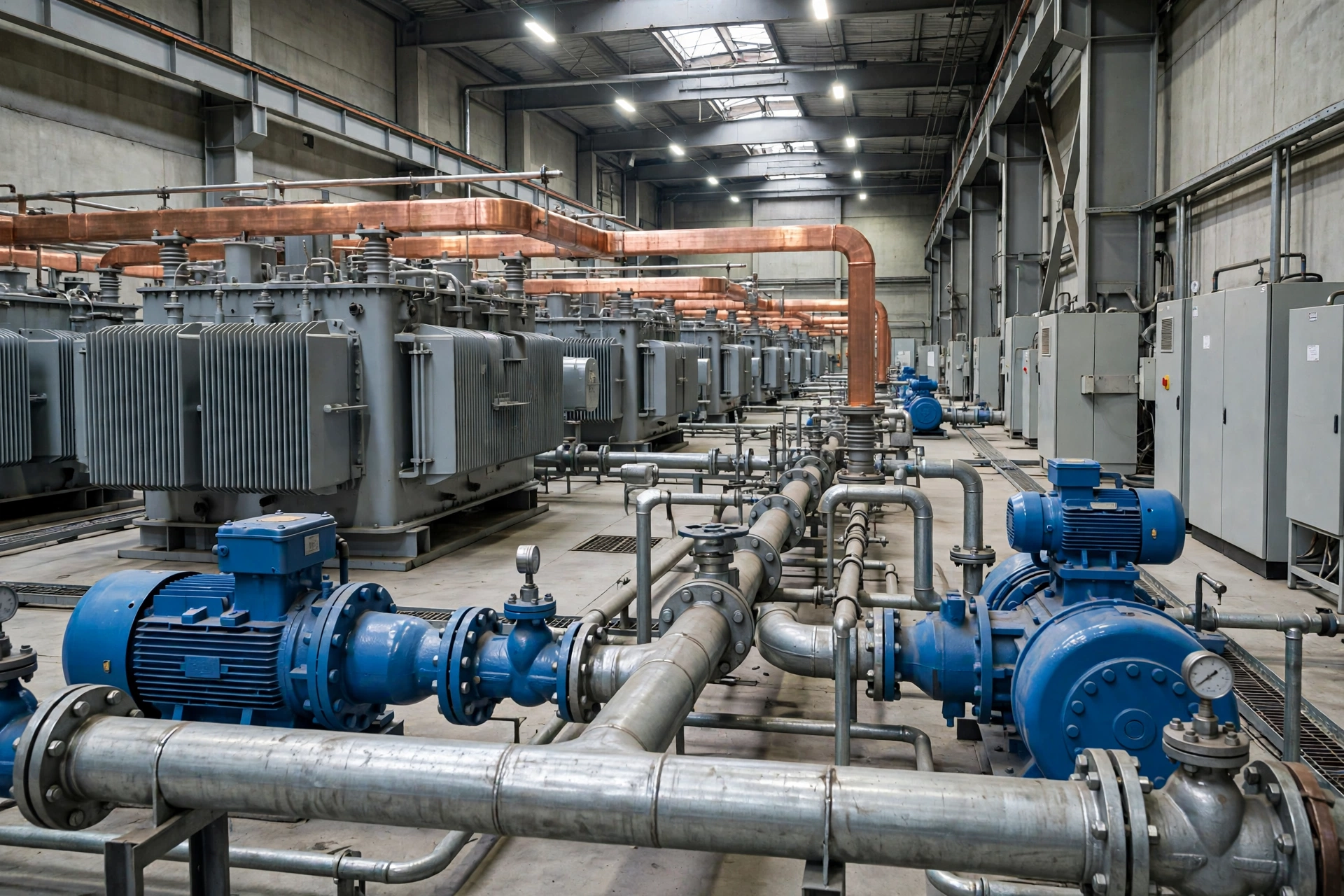
The thresholds in the previous section are not theory. Three recent cases show what they look like in practice — and what the generator question actually costs when it is answered wrong.
San Ciprián, Spain — April 2025
On 28 April 2025, a cascading grid failure between Spain and France blacked out large parts of the Iberian Peninsula. Alcoa’s San Ciprián complex — one of Europe’s largest, with a 228,000-tonne smelter and a 1.5-million-tonne refinery — lost power with no warning.
The electrolytic cells need constant temperatures above 950°C to keep the metal molten. Within hours, 60% of the potlines had dropped below the critical 700°C threshold. Cells that solidify completely require rebuilding at $500,000 to $1 million per cell, with repairs taking 6–12 months. Alcoa’s planned $15 million restart budget for the second quarter of 2025 was overtaken by the event. Direct repair costs were estimated at $200–300 million, and the 6–12 month restart timeline implied 114,000–228,000 tonnes of lost production — $228–570 million in revenue at 2025 prices.
No diesel generator could have kept San Ciprián’s potlines running. The plant’s grid connection is measured in hundreds of megawatts. But the case is still the best argument for a properly sized standby system in the industry: the damage was done in hours, the cells that crossed 700°C were the ones that needed rebuilding, and every hour of controlled cooling, orderly metal handling and protected auxiliary equipment in that first window reduced the number of cells that crossed the line. The generator does not save the potline. It saves the pots that would otherwise join the rebuild list.
Mozal, Mozambique — the power contract that runs out
South32’s Mozal smelter in Mozambique produced 314,000 tonnes of aluminium in the 2024 financial year. Its power comes under a dual-supply agreement: Hidroeléctrica de Cahora Bassa (HCB) hydroelectric power as the primary source, with South African utility Eskom as the designated backup. South32 holds a 63.7% stake in the smelter.
In 2025 the arrangement came under strain. The company had been unable to secure affordable and reliable electricity beyond March 2026, despite negotiations that began in 2019. Drought conditions threatened HCB’s hydroelectric output, and with water levels falling, the dam’s ability to generate the smelter’s supply was in doubt. Production guidance for the 2026 financial year went under review.
Mozal is the other shape of the smelter power problem. San Ciprián was a sudden blackout. Mozal is a slow one: a power supply that may not be there next year, at a price the smelter can afford. The generator question at a plant like Mozal is not only about a 10-second start. It is about fuel autonomy measured in weeks, about whether the standby plant can carry the critical loads through a period of unreliable supply, and about the point at which a smelter that cannot secure its grid contract starts planning its own generation. A 314,000-tonne smelter at 14 MWh per tonne draws about 500 MW. Its standby diesel plant, sized to the critical loads, is a 3,000–5,000 kVA installation. The gap between those two numbers is the whole subject of this article.
EGA, Dubai — 3,000 MW of self-supply
Emirates Global Aluminium’s Dubai plant takes the opposite approach: it generates its own power. The site has 3,000 MW of installed generation capacity supplying a 2,000 MW continuous load through three 132 kV substations, and its energy intensity was 14.091 MWh per tonne in 2023.
A self-supplied smelter does not escape the generator question. It changes it. With 3,000 MW of captive generation against a 2,000 MW load, the plant carries 1,000 MW of reserve — but that reserve is itself a set of large generating units that can trip, and the potline’s sensitivity to a voltage excursion is unchanged. EGA’s own engineering work on security of electricity supply treats the potline load as a distinct problem: the load is continuous, stable and enormous, and even brief interruptions can solidify molten metal above 965°C and cause irreparable damage to the production vessels. The plant’s defence is redundancy in supply infrastructure, reactive power reserve management and load participation — the grid-scale version of the same discipline a smaller smelter applies with a standby diesel set and an automatic transfer switch.
The lesson from all three cases is the same. The potline is protected by the quality and redundancy of its power supply, not by a diesel generator. The generator protects everything that makes the potline recoverable.
Sizing the Generator: The Loads That Must Not Stop
Sizing starts from the critical-load list, not from the smelter’s total demand. The list is built by walking the process and asking, for each system, what happens in the first 10 seconds, the first hour and the first 24 hours without power. The loads that survive that test are the generator load. Everything else is shed.
Rectifier and potline cooling
The rectifiers that convert the grid’s alternating current to the potline’s direct current are water-cooled, and their cooling pumps are the first load on the generator. A rectifier that loses cooling while its transformers are still hot — or while it is being re-energised after an outage — is a rectifier that fails. The cooling-water pumps for the rectifier station and the potline busbar cooling system typically draw 150–400 kW on a mid-size smelter, and they start as direct-on-line motors with starting currents five to seven times running current. Motor starting is the sizing constraint here, not the running load: the generator must accept the pump starts without a voltage dip that trips the control system.
Casting, metal handling and cranes
Molten metal does not wait. The casthouse holds metal in furnaces at 700–750°C, and the holding furnaces, launders and casting machines need power to tap, transfer and cast the metal before it freezes in place. A crucible of metal frozen in a launder is a day of cutting and relining. The casthouse load — holding furnace burners and controls, casting machine drives, cooling water and the overhead cranes that move ladles — typically draws 400–1,200 kW on a mid-size smelter, with crane motors adding large starting surges. The cranes are also the safety load: a ladle of molten metal suspended over a potroom floor when the power fails must be set down under control, not left hanging.
Carbon plant, gas treatment and compressed air
The carbon plant bakes anodes at over 1,000°C, and a smelter producing 300,000 tonnes a year makes about 500 anodes a day, each anode lasting 20–30 days in service. The anode baking furnaces and the rodding shop are not usually generator loads — they stop safely — but the gas treatment plant is. The potrooms generate fluoride fumes continuously while the pots are hot, and the gas treatment centre fans and the dry scrubbers keep those fumes out of the working environment. Compressed air is the other quiet critical load: pot tending machines, anode changing equipment and pneumatic controls all run on it, and a compressor station of 200–400 kW is a normal part of the critical list.
Control, safety and restart power
The control rooms, PLCs and potline control system are the smallest loads and the most important. They are carried through the outage by UPS, and the generator’s job is to take over from the UPS before its batteries run out — typically 15–30 minutes. Emergency lighting, gas detection, fire pumps and the communications systems that let the control room talk to the potrooms complete the list. These loads are small — 100–300 kW in total — but they are the loads that decide whether the first three hours are managed or improvised.
| Smelter size | Annual output | Critical load | Recommended standby set |
|---|---|---|---|
| Casthouse / remelt only | 20,000–50,000 t | 500–900 kVA | 1,000 kVA, single set |
| Small smelter | 50,000–120,000 t | 900–1,600 kVA | 1,500–2,000 kVA, single set |
| Mid-size smelter | 150,000–250,000 t | 1,600–2,800 kVA | 2,000–3,500 kVA, two paralleled sets |
| Large smelter | 300,000–500,000 t | 2,800–5,000 kVA | 4,000–6,000 kVA, three paralleled sets at 11 kV |
The table is a starting point, not a specification. Two smelters of the same output can differ by 50% in critical load depending on whether the casthouse is on the same site, whether the carbon plant is in-house, and how much of the gas treatment plant must keep running. The generator sizing guide method still applies: list every load, apply diversity, add the largest motor start, and add 10–20% headroom for the loads that will be added in the first five years. The difference from a normal industrial site is that the list is built from the potline’s damage window, not from the building’s load schedule.
The standby and prime power ratings matter here in a specific way. A smelter standby set is a classic standby duty: it waits, sometimes for years, and then must run for days. It should be rated standby, tested monthly under load, and sized so that its normal running load sits at 60–75% of rating — high enough to avoid wet stacking, low enough to accept a motor start without tripping. A set that runs at 30% load for a week will glaze its cylinders; a set that runs at 100% load for a week will not last the week.
Fuel Autonomy: How Long the Set Can Hold the Line
A smelter outage is not measured in hours. San Ciprián’s restart was measured in months, and even a well-managed grid outage after a storm or a substation fire can last 48–72 hours. The generator’s fuel plan must match that reality, and the numbers are large enough to need a bulk tank and a delivery contract, not a bigger day tank.
Fuel use at the loads that matter
A 2,500 kVA standby set (2,000 kW prime) burns roughly 420 L/h at full load and about 320 L/h at 75% load. A 1,500 kVA set (1,200 kW) burns roughly 250 L/h at full load and 190 L/h at 75%. These are the figures that decide the tank, and they are the reason a smelter’s standby plant is usually two or three sets rather than one large one: at light load during a long outage, one set can be shut down and the other run at its efficient point, instead of a single large set running at 30% load and glazing its cylinders.
| Standby set | Average load | Fuel use | 24 hours | 72 hours |
|---|---|---|---|---|
| 1,500 kVA | 900 kW (75%) | ~190 L/h | ~4,560 L | ~13,700 L |
| 2,500 kVA | 1,500 kW (75%) | ~320 L/h | ~7,700 L | ~23,000 L |
| 3,500 kVA (2 × 1,750 kVA) | 2,100 kW (60%) | ~440 L/h | ~10,600 L | ~31,700 L |
| 5,000 kVA (3 × 1,750 kVA) | 3,000 kW (60%) | ~630 L/h | ~15,100 L | ~45,400 L |
A mid-size smelter holding its critical loads for 72 hours needs roughly 23,000 litres of fuel on site, plus a margin for the delivery truck that may not arrive on schedule. That is a 30,000-litre bulk tank as a minimum, and most smelters carry 50,000 litres or more. The tank is not a cost to minimise. It is the difference between a 72-hour outage and a 72-hour outage that ends at hour 40 because the fuel ran out.
The 24-hour and 72-hour fuel plan
Three rules govern the fuel plan. First, the tank must be sized for the longest outage the site plans for, not the average one. Smelters plan for 72 hours because grid restoration after a major event — a substation fire, a transmission tower collapse, a regional blackout — is measured in days. Second, the fuel must be kept usable. Diesel in a standby tank degrades: water condenses, microbes grow, and the fuel that was fine at the last test can clog filters at the first real start. Diesel fuel ageing is a routine maintenance item at a smelter, with fuel polishing and testing on a schedule, not an afterthought. Third, the delivery contract must be written before the outage. A fuel supplier that has never been to the site will not find it in a regional blackout, and a smelter that has never tested its delivery route will discover the gate code, the access road and the tank connection are all wrong at the worst possible moment.
Fuel cost is the smallest part of the smelter generator’s economics. At $1.00 per litre, 72 hours on a 2,500 kVA set costs about $23,000 in fuel. The cell rebuilds at San Ciprián were estimated at $200–300 million. The fuel bill is not the number to optimise.
Rectifiers, Harmonics and Placement
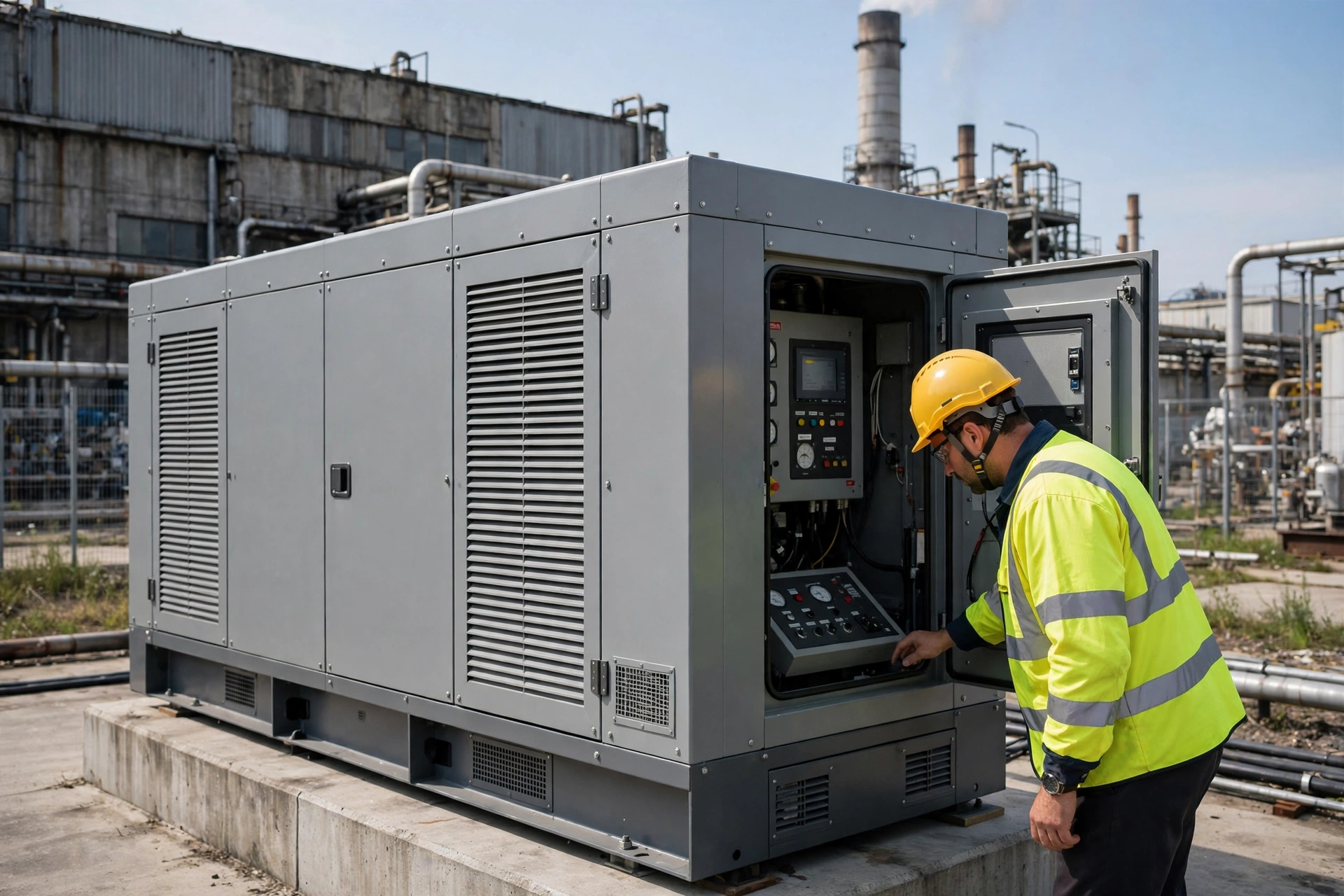
A smelter’s electrical environment is unlike any other industrial site, and the generator plant has to live in it. Three issues decide whether the set works when it is needed: the rectifier load, the voltage level, and the physical environment around the potrooms.
Why rectifier load is not a normal load
The potline is fed by rectifiers — typically four to six units in parallel, each rated beyond 100 kA — and the rectifier station is the largest single electrical load on the site. The generator does not feed the rectifiers, but it feeds the equipment around them, and the rectifier station’s harmonics shape the power quality of the whole site. Rectifier loads draw non-sinusoidal current, and the total harmonic distortion on a smelter’s network is higher than on a normal industrial site. The generator’s alternator must be sized for the harmonic content of the loads it actually feeds — the variable-speed drives on the cooling pumps, the cranes and the gas treatment fans — and the rule from the harmonics work applies here: an alternator feeding non-linear loads needs to be oversized, often to 2.5–3 times the load kVA, or the voltage waveform distorts and the sensitive control equipment trips.
The practical consequence is that the generator’s alternator is specified with a low subtransient reactance and a permanent-magnet excitation system, and the critical control loads are fed through their own UPS and isolation transformers. A smelter that buys a generator on kVA alone, without asking about the alternator’s harmonic performance, will find out about it at the first load-bank test — or at the first real outage.
Medium voltage for large sets
A 5,000 kVA standby plant at 400 V draws more than 7,200 A. The cables, switchgear and busbars for that current are large, expensive and difficult to route across a smelter site. Above about 2,500–3,000 kVA, the standby plant is usually built at 11 kV, with step-down transformers at the load centres. A high-voltage generator at 11 kV reduces the current to about 260 A for the same power, and the cable runs across a large site become practical. The trade-off is that the generator, the switchgear and the protection system all become medium-voltage equipment, with the maintenance and safety procedures that go with it. The decision is made on cable length and site layout, not on preference.
Heat, fluoride dust and salt air
The generator’s physical location is the last sizing decision, and at a smelter it is a hard one. The potrooms run hot — ambient temperatures of 40–50°C around the potline are normal — and a generator rated at 25°C loses output in that heat. Above 40°C, the alternator loses about 3% per 10°C, and the engine derates as well. A set installed next to the potrooms needs to be sized for the temperature it will actually run in, not the catalogue temperature.
Fluoride dust is the smelter’s particular problem. The potrooms emit fluoride compounds that are corrosive to steel, copper and aluminium alike. A generator installed in or near a potroom needs a filtered air intake, a corrosion-resistant enclosure and a maintenance schedule that inspects the radiator, the alternator windings and the control cabinet for fluoride attack. The same discipline applies to coastal smelters, where salt air adds its own corrosion load. The set is usually placed in its own building or containerised enclosure, upwind of the potrooms, with a cable run to the load centres — and the cable run is part of the cost, not an afterthought.
Distance also matters for the start time. The generator must be close enough to the critical loads that the voltage drop on the cable run does not trip the motor starters, and the fuel delivery route must reach it without crossing the plant’s internal traffic. A set that is perfectly sized and perfectly maintained, but installed 800 metres from the load it protects, is a set that will not start the cooling pumps.
Frequently Asked Questions
What size generator does an aluminium smelter need?
A 250,000-tonne smelter typically needs 2,000–3,500 kVA of standby diesel for its critical loads — rectifier and potline cooling, casting, cranes, gas treatment, compressed air and controls. Small smelters need 1,000–2,000 kVA and large smelters 4,000–6,000 kVA, usually as paralleled sets. The potline itself, at 200–500 MW, cannot be backed up by diesel.
Do aluminium smelters need a backup generator?
Yes, and the reason is asset protection rather than production. A generator keeps the cooling water, casting furnaces, cranes and control systems running so the potline shuts down safely and restarts in days. Without it, a long outage freezes the bath, cracks the cathode linings and can cost hundreds of millions of dollars in rebuilds and lost production.
How long can an aluminium smelter run on a generator?
The generator can run as long as its fuel lasts — 24 hours on a 2,500 kVA set needs about 7,700 litres, and 72 hours needs about 23,000 litres. The potline itself does not run on the generator at all. The set holds the critical loads that protect the pots until grid power returns, and the practical limit is the bulk fuel tank and the delivery contract behind it.
What happens to an aluminium potline during a power outage?
The bath cools from 950°C immediately. Outages over three hours often shut down all the cells in a potline; below 900°C a large volume of bath freezes, and cells that solidify completely must be rebuilt at $500,000–$1 million each. Restart is a cell-by-cell operation, and each shutdown costs 100–400 days of cathode life.
Can a diesel generator power an aluminium smelter?
No — not the potline. A mid-size smelter draws about 400 MW continuously, and no practical diesel installation backs that up. A diesel generator powers the critical auxiliary loads: cooling, casting, cranes, gas treatment and controls. That is the correct scope, and it is the scope this article sizes.
Specification Checklist: Six Lines Before the Deposit
1. What is the critical load, in kVA, by load group? The quotation must show the load list — cooling, casting, cranes, gas treatment, compressed air, controls — with running load, starting load and diversity applied. A single kVA figure with no load list is not a specification.
2. What is the potline damage window the set is designed for? The design must state the outage duration it covers — 24 hours, 72 hours — and the fuel tank and delivery contract that support it. A set with a 500-litre day tank and no bulk storage is a set that runs out of fuel on the first day.
3. Is the set rated standby, and at what site temperature? The rating letters must appear on the datasheet, and the derated figure at the actual installation temperature — 40–50°C near a potroom — must be stated. A set rated at 25°C sea level is not the set the smelter will own.
4. Can the alternator handle the harmonic loads? Ask for the alternator’s subtransient reactance and its harmonic performance with the variable-speed drives on the cooling pumps and gas treatment fans. A distorted voltage waveform will trip the control equipment the generator is there to protect.
5. Is the plant medium voltage, and who maintains it? Above 2,500–3,000 kVA, the standby plant is usually built at 11 kV. The quotation must include the switchgear, the step-down transformers and the maintenance regime for medium-voltage equipment.
6. Has the set been tested on the real loads? A load-bank test proves the generator works. It does not prove the cooling pumps start, the cranes move and the gas treatment fans run. The acceptance test must include the actual critical loads, in the actual start sequence, with the steel mills comparison in mind: the same discipline that protects a melt shop protects a smelter.
A smelter buys a generator for the worst day in its history, not for the average one. The potline will stop when the grid fails, whatever the generator does. What the generator decides is whether the plant restarts in a week or rebuilds for a year. Size it from the critical-load list, fuel it for 72 hours, test it on the real loads, and place it where the heat and the fluoride cannot reach it. The price of the set is a rounding error against the cost of a frozen potline.
For a quotation sized to your smelter’s critical loads, contact PAVO — PAVO builds open, silent and containerised sets from 9 to 3,750 kVA, powered by Cummins, Weichai, Yuchai and Shanghai Diesel, and will size the standby plant from your load list and your site conditions.