

What Size Generator Does a Fertilizer Plant Need? | PAVO
A fertilizer plant does not just lose production when the grid fails. It loses the synthesis loop — and a cold loop takes days to bring back, not hours.
What size generator does a fertilizer plant need? A small blending plant needs a 125–250 kVA standby set, a mid-size urea line 500–1,250 kVA, and a large ammonia and urea complex 2,000–5,000 kVA in parallel prime sets — sized for the essential board, not the whole plant, because the synthesis loop itself cannot run on diesel.
Contents:
- Why a Fertilizer Plant Is Not Just Another Big Load
- What the Generator Has to Power
- Sizing by Plant Capacity
- The Ammonia Loop Problem
- What Happens in the First 60 Seconds
- Three Plants, Three Lessons
- Frequently Asked Questions
- Specification Checklist
Why a Fertilizer Plant Is Not Just Another Big Load
Fertilizer is the largest chemical industry on earth by tonnage. The International Fertilizer Association puts global ammonia production at roughly 185 million tonnes a year, and about 70% of that ammonia ends up as fertilizer. Urea production runs at roughly 180 million tonnes a year. A single large complex — CF Industries at Donaldsonville, Louisiana, the largest nitrogen fertilizer complex in the world — produces more ammonia in a year than many countries consume. These plants run 24 hours a day, 330-plus days a year, and they run hot, pressurised and continuous. Nothing about that profile suits a power cut.
The first difference from an ordinary factory is the chemistry. Ammonia is made by the Haber-Bosch process: nitrogen and hydrogen reacted over an iron catalyst at 150–250 bar and 400–500°C. Urea is made from that ammonia and carbon dioxide at 140–250 bar and 180–210°C. Both processes are continuous, and both punish interruption. A warehouse can wait out a blackout. A synthesis loop cannot. When the power goes, the loop trips, the pressure falls, the catalyst bed starts to cool, and the clock starts on a restart measured in days.
The second difference is what is inside the pipes. Ammonia is toxic and stored refrigerated at -33.3°C or under pressure. Its IDLH — the concentration immediately dangerous to life or health — is 300 ppm, and the occupational exposure limit is 50 ppm. A power failure that stops the refrigeration compressors, the cooling water pumps and the gas detection system does not just cost production. It changes the safety case of the whole site within minutes. The flare has to keep burning. The instrument air has to keep flowing. The control room has to keep seeing.
The third difference is the market the plant serves. Fertilizer is seasonal in a way almost no other industrial product is. A plant that goes down in February, at the start of the northern hemisphere top-dressing season, does not lose a week of output — it loses the week its customers cannot get back. Winter Storm Uri in February 2021 proved the point: fertilizer plants across the Gulf Coast shut down on a natural gas shortage after the freeze, UAN prices rose $100 a ton within days, urea rose $25–40 a ton, and one Oklahoma co-operative burned through 120,000 gallons of UAN 28 in three days before its tanks ran empty.
The fourth difference is that most of the load cannot be backed up at all. A 1,000 tonne-per-day ammonia plant draws 15–25 MW across the whole complex, and the synthesis gas compressors that dominate that load are steam-turbine driven machines of several megawatts each. No diesel installation backs up 20 MW. The generator’s job is narrower and more specific: keep the essential board alive — refrigeration, cooling water, instrument air, flare, controls and fire water — so the plant shuts down safely instead of being damaged by the outage, and so the restart takes days instead of weeks.
That distinction is the whole subject of this article. Sizing a generator for a fertilizer plant is not a matter of adding up the nameplate and buying the biggest set in the catalogue. It is a matter of deciding which loads must never stop, which loads can wait, and how long the synthesis loop can be left without power before the damage becomes permanent.
What the Generator Has to Power
A fertilizer plant has six load groups, and they do not matter equally in an outage. The sizing exercise starts by sorting them into three tiers: must never stop, must restart within minutes, and can wait until the grid returns.
Tier 1 — must never stop. The distributed control system, SCADA, gas detection, flare ignition and pilot, instrument air compressors, emergency lighting and the UPS. The load is small, typically 30–80 kW even on a large complex, but it is the load that decides whether the rest of the plant can be shut down safely. Lose the control system and the operators are blind during the event that matters most. Lose instrument air and the control valves freeze in their last position.
Tier 2 — must restart within minutes. Ammonia refrigeration compressors, cooling water pumps, boiler feedwater pumps, nitrogen blanketing, the urea solution pumps needed to drain the lines, and the fire water pumps. This is where the kVA lives. The refrigeration compressors are the single largest electrical machines on the essential board, typically 250–500 kW each on a large plant, and they start direct-on-line or with a soft starter against a cold suction.
Tier 3 — can wait. Bagging lines, warehousing, workshops, HVAC in non-critical areas, product conveyors and office loads. These are shed on transfer and restored when the grid returns. Putting them on the generator board is the most common sizing mistake in fertilizer backup design: it inflates the set by 30–40% and buys nothing, because a bagging line cannot run when there is no product coming off the granulator.
The load split inside a typical ammonia and urea complex looks like this:
| Load group | Share of plant electrical load | On the generator board? |
|---|---|---|
| Synthesis gas compressors (steam turbine) | 40–55% | No — steam driven, cannot be backed up |
| Ammonia refrigeration compressors | 10–15% | Yes — reduced capacity |
| Cooling water pumps | 8–12% | Yes |
| Urea synthesis and granulation drives | 8–12% | Selected only — drain-down |
| Instrument air, nitrogen, flare | 3–5% | Yes — always |
| Controls, SCADA, gas detection, lighting | 1–3% | Yes — always |
| Bagging, warehousing, workshops | 5–8% | No — shed on transfer |
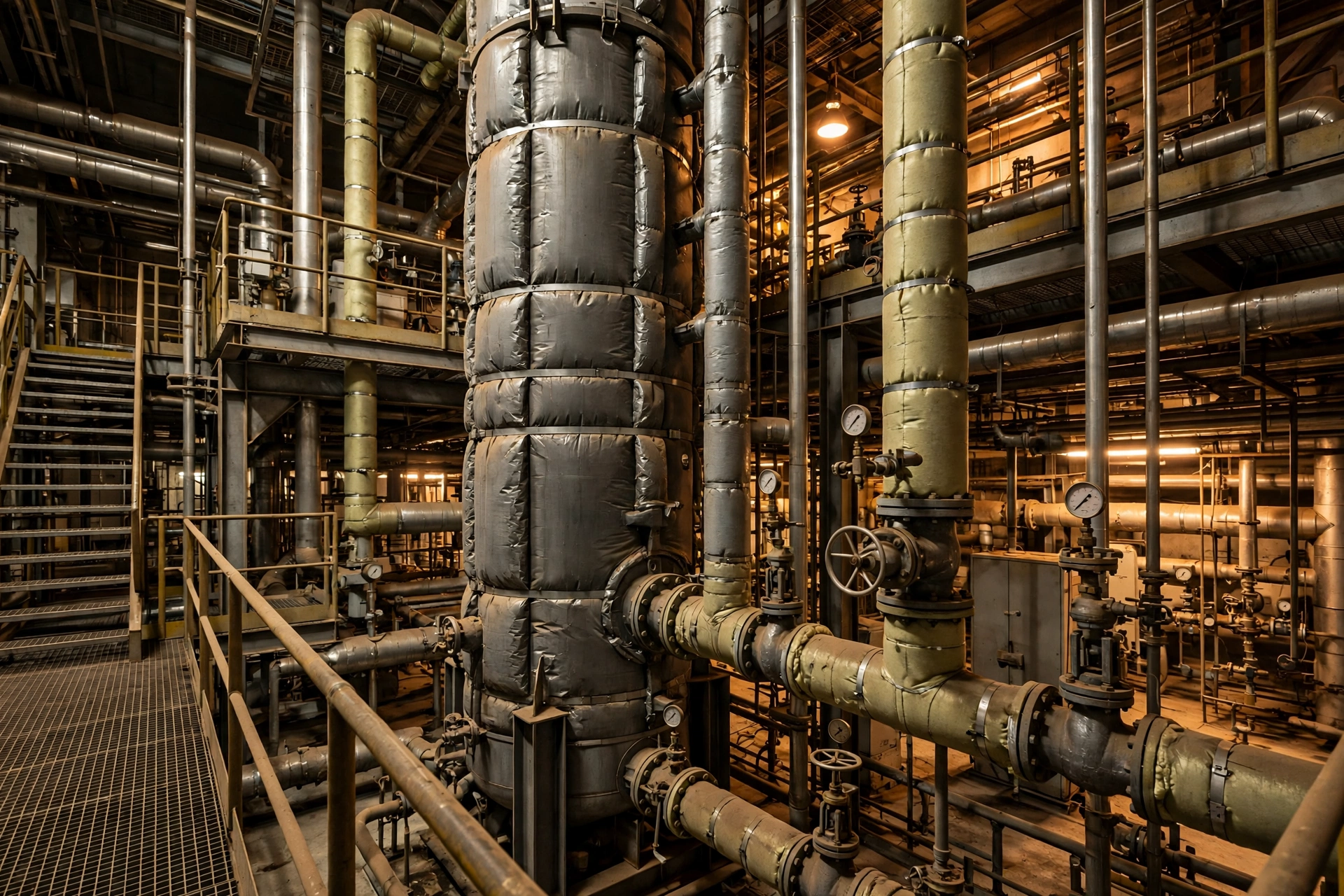
Two points in that table deserve attention. First, the synthesis gas compressors — the biggest single load in the plant — are not on the generator board at all, because they are steam-turbine driven and draw several megawatts each. Any quotation that claims to back up “the whole fertilizer plant” with diesel sets is either misunderstanding the process or selling far more kVA than the site can use. Second, the refrigeration load is not optional. Ammonia stored at -33.3°C warms up when the refrigeration stops. The tank pressure rises, the relief valves lift, and product that took energy to liquefy is vented to the flare. On a 10,000-tonne refrigerated ammonia tank, a day without refrigeration is not an inconvenience. It is a controlled loss of inventory and a safety event.
The honest way to frame the board is as a life-support system for a chemical process, not as a miniature power station. The generator keeps the plant safe, keeps the loop warm enough to restart, and keeps the product in the tank. Production itself stops, and any sizing exercise that pretends otherwise will produce a number nobody can afford and a set nobody can use.
Sizing by Plant Capacity
Fertilizer plants fall into four size bands, and the generator follows the essential board, not the nameplate. The numbers below are worked from real load lists: a small blending plant, a mid-size urea line, a large ammonia and urea complex, and a mega complex. They follow the generator sizing guide method — list every load, apply starting kVA, then add margin — and should be treated as starting points for a load study, not as a substitute for one.
| Plant type | Capacity | Essential load | Generator |
|---|---|---|---|
| Blending / NPK granulation | 50–200 t/day product | 80–200 kW | 125–250 kVA standby, single set |
| Single-line urea or NPK | 500–1,000 t/day | 400–900 kW | 500–1,250 kVA prime |
| Ammonia + urea complex | 1,000–2,000 t/day ammonia | 1,500–4,000 kW | 2,000–5,000 kVA prime, 2–3 parallel sets |
| Mega complex (Donaldsonville scale) | 3,000+ t/day ammonia | 5,000+ kW | Multiple 2,000–3,750 kVA sets, medium voltage |
Small blending and NPK plants are the simplest case. The process is mechanical — mixing, granulating, drying, bagging — and the essential board is mostly dust extraction, the granulator drive, drying air fans and controls. A 200 kVA standby set covers most plants in this band, and a single set is acceptable because the process can be stopped and restarted in hours. The rating question still matters: a standby rating allows 200 hours a year of emergency running under ISO 8528, and a plant in a region with an unreliable grid will exceed that quickly. Buyers in that position should read the standby and prime power ratings guide before choosing, because a set run past its standby limit is a set with a voided warranty and a shortened life.
Mid-size single-line urea or NPK plants are where the sizing gets serious. The essential board now includes refrigeration, cooling water and the urea drain-down pumps, and the total lands between 400 and 900 kW. A single 1,000 kVA prime set is the common answer, but it is a fragile one: one set means one point of failure, and a fertilizer plant has no tolerance for a failed start. Two 625 kVA prime sets in parallel cost roughly 15–20% more and give the plant N+1 cover on the essential board. That premium is small against the cost of a lost synthesis loop.
Large ammonia and urea complexes are the core of this article. At 1,000–2,000 tonnes of ammonia a day, the essential board runs 1,500–4,000 kW, and the answer is two or three prime sets in parallel — typically 2,000–3,750 kVA frames. The parallel configuration matters more than the headline number. Sets should be able to start, synchronise and share load without operator intervention, and the switchgear should shed Tier 3 loads automatically on transfer. A plant that depends on an operator running across the site to open a breaker has not bought backup power. It has bought a hope.
Mega complexes need medium voltage. Once the essential board passes about 4,000 kW, low-voltage paralleling becomes a cabling and fault-level problem, and the right answer is 11 kV generation with step-down to the 400 V essential board. The high voltage guide covers the threshold in detail: cable sizes, protection grading, and the point at which a containerised low-voltage set stops being the cheapest option. Few fertilizer buyers need this, but the ones who do should decide it at the design stage, not after the low-voltage switchboard is already ordered.
Fuel autonomy follows the same logic as the sizing. A 72-hour autonomy is the standard target for a fertilizer complex, because a grid outage that also disrupts gas supply — the Uri pattern — is measured in days, not hours. At 75% load, a diesel set burns roughly 0.21–0.25 litres per kWh, so a 2,000 kW essential board needs about 440 litres an hour and roughly 32,000 litres for 72 hours. That means a 35,000-litre bulk tank with a day tank at each set, and a fuel delivery contract that works when the roads are bad. The quiet risk here is diesel fuel ageing: a tank that sits for eleven months between outages grows water and microbes, and a set that starts perfectly and then chokes on contaminated fuel at hour six is a familiar failure. Test the fuel, polish it, and log the results.
The Ammonia Loop Problem
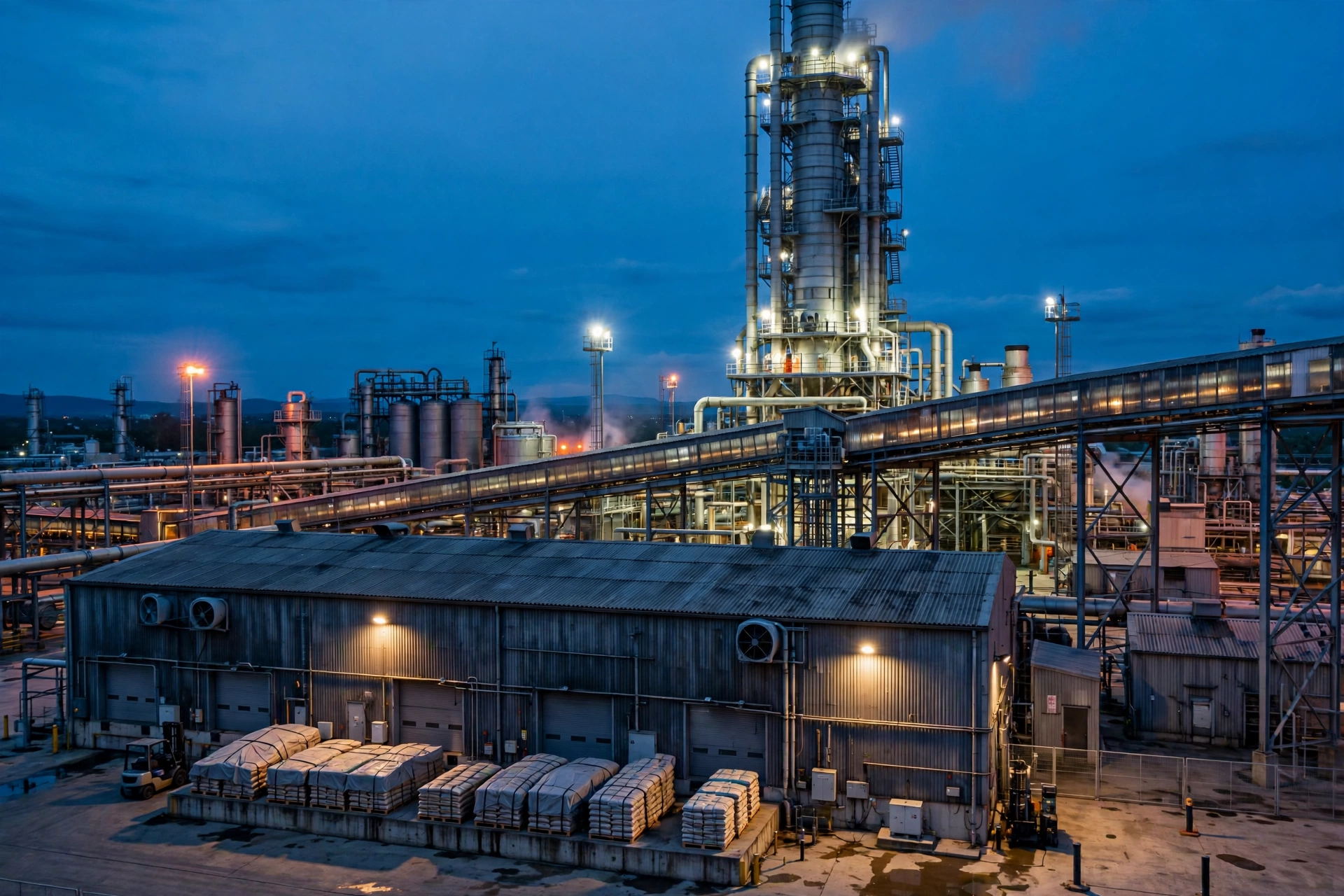
Everything about fertilizer backup power comes back to one piece of equipment: the ammonia synthesis loop. The hazardous-area rules are the same ones that govern chemical plants, and the chemical-plants article covers ATEX zoning in full — the set, the ATS and the fuel system all sit outside the classified zones. It is a converter full of iron catalyst running at 150–250 bar and 400–500°C, and it is the least forgiving load in the plant — not because it draws power, but because it cannot be allowed to go cold.
The catalyst must stay hot
The iron catalyst in the synthesis converter works only above roughly 300°C. On a trip, the loop is isolated under synthesis gas or nitrogen pressure and the bed is held as hot as residual heat allows. If the bed cools below that threshold and air gets in, the catalyst oxidises and must be re-reduced — a controlled, multi-day procedure that cannot be rushed without sintering the catalyst and shortening its life. A catalyst charge costs hundreds of thousands of dollars and takes weeks to replace. The generator cannot keep the converter at 450°C. What it can do is keep the cooling water, the instrument air and the control system alive so the operators can hold the loop in a safe hot standby instead of watching it cool uncontrolled. That is the difference between a restart in two days and a restart in two weeks.
Urea lines freeze solid
Urea leaves the synthesis section as a melt at 180–210°C and solidifies at 132.7°C. On a power failure, the urea solution pumps stop, the melt stops moving, and every line, valve and nozzle in the finishing section starts to cool. A urea line that freezes solid cannot be restarted by switching the pump back on. It has to be steamed out, section by section, and a blocked prilling tower distributor can take a full shift to clear. The essential board therefore carries the urea drain-down pumps and the tracing steam supply, and the operating procedure on transfer is to drain the lines deliberately rather than leave them full. Plants that skip this step discover the cost at restart: a granulator that will not turn, a prilling tower that will not distribute, and a day of production lost to steam hoses.
Refrigeration is a safety load, not a comfort load
Ammonia refrigeration is often misclassified as a process load that can wait. It cannot. Refrigerated ammonia storage sits at -33.3°C, and the refrigeration compressors are what hold it there. When they stop, the tank warms, the pressure rises, and the relief valves lift to the flare. Each lift is product lost and a flaring event the neighbours notice. On a 10,000-tonne tank, a day without refrigeration vents tonnes of ammonia through the flare system — and that assumes the flare is still lit, which itself depends on the generator keeping the pilot gas and ignition alive. The refrigeration compressors are also the hardest loads to restart: a 315 kW screw compressor starting direct-on-line draws six to seven times its running current for the first seconds, and two of them starting together will pull the generator terminal voltage down past the point where the control system drops out. Stagger the starts, use soft starters, and check the motor starting calculation before the order is placed. The calculation is the difference between a board that recovers and a board that trips twice.
What Happens in the First 60 Seconds
The first minute of a fertilizer plant outage decides whether the next week is a restart or a recovery. The sequence is fixed, and every second of it should be automatic.
The transfer switch decides first
Grid voltage collapses. The automatic transfer switch senses the loss, confirms it is not a dip — typically a 3–5 second delay to ride through transient sags — and signals the generator to start. NFPA 110 Level 1 requires emergency power within 10 seconds for life-safety loads, and a fertilizer plant’s safety loads are held to the same standard even where the code does not strictly require it, because the flare and the gas detection system are life-safety loads in every sense that matters. The set cranks, reaches rated speed and voltage, and the ATS transfers the essential board. From grid failure to loaded generator, a well-maintained system does it in 8–12 seconds. A system that takes 30 seconds has a battery, a starter or a fuel problem that should have been found in the weekly test.
Load shedding happens on its own
The moment the ATS transfers, the load-shedding scheme acts. Tier 3 loads — bagging, warehousing, workshops, non-essential HVAC — drop off through shunt-trip breakers or contactors wired to the transfer signal. Nothing waits for an operator. The refrigeration compressors then start in sequence, staggered by 10–15 seconds each, so the generator never sees two large motor starts at once. Cooling water pumps follow, then the instrument air compressors, then the urea drain-down pumps. The whole sequence takes 45–60 seconds. Any plant where the sequence depends on someone reading a procedure and pressing buttons will lose the first minute, and the first minute is when the catalyst bed is hottest and the urea lines are still liquid.
The flare has to keep burning
While the electrical sequence runs, the flare system is the plant’s safety valve. The synthesis loop vents to the flare on trip, and the flare pilot must stay lit through the transfer. Pilot gas comes from the plant’s own gas system, and the ignition is electric — which means the flare panel is on the UPS and then on the generator board, in that order, with no gap. A flare that goes out during a trip is a release of unburned ammonia and hydrocarbons to atmosphere, and it is the failure mode that turns a power cut into a regulatory incident. The fire water pumps are the last item in the sequence: a 185 kW electric fire pump, or a diesel-driven fire pump that starts on its own pressure switch, independent of the generator entirely. The best plants have both.
Three Plants, Three Lessons
Winter Storm Uri: Texas Gulf Coast, February 2021
Winter Storm Uri hit Texas between February 14 and 18, 2021, and it remains the clearest recent example of what a combined power and gas failure does to fertilizer production. About 9.9 million people lost power, and Texas chemical plants — roughly 75% of total US chemical production — froze, lost power, or both. Fertilizer plants across the Gulf Coast shut down, not only because the grid failed but because natural gas production itself fell and the gas that remained was diverted to heating and power generation. Ammonia is made from natural gas, so a gas shortage is a feedstock shortage as well as a fuel shortage.
The market effect was immediate. UAN prices rose $100 a ton within days, urea rose $25–40 a ton, and farmers heading into the spring top-dressing season found their suppliers out of stock. Sooner Co-op in Okeene, Oklahoma, burned through 120,000 gallons of UAN 28 in three days and then had empty tanks. The Dallas Fed put total storm losses at $80–130 billion. For the fertilizer plants themselves, the damage was not mainly physical. It was the restart: loops that had tripped cold, catalysts that needed re-reduction, and lines that needed steaming out, all while gas supply was still constrained. Plants with properly sized essential boards and tested transfer sequences held their loops in hot standby and restarted in days. Plants without them measured their restarts in weeks — and paid for it in a market where every tonne was suddenly worth more.
CF Industries: Billingham and Ince, United Kingdom, September 2021
Six months later, the same lesson arrived from a different direction. In September 2021, record natural gas prices forced CF Industries to halt ammonia production at Billingham and Ince in the United Kingdom — two plants that together supplied a large share of Britain’s fertilizer and, critically, most of its food-grade carbon dioxide, a by-product of ammonia production. The CO2 shortage threatened meat processing, brewing and food packaging within days, and the UK government stepped in with a support deal to restart one plant temporarily.
No generator could have prevented that shutdown: the cause was gas price, not grid failure. But the episode belongs in this article because it shows what “essential” means in a fertilizer plant. The plants were not dark. Their essential boards kept refrigeration, storage, safety systems and controls alive through a controlled shutdown and a weeks-long idle period, and the plants restarted when the commercial decision was made — not after a repair programme. A plant whose essential board fails during a commercial shutdown faces the same cold-loop restart as a plant whose grid fails. The generator protects the asset in both cases, and the Billingham episode is the proof that the protection has to work when nobody is producing anything.
The worked example: a 1,000 tonne-per-day ammonia plant
The third case is a worked example rather than a real site, and it is included because it shows the arithmetic that the first two cases only imply. Take a 1,000 tonne-per-day ammonia plant with a 1,750 tonne-per-day urea line — a common size in India, the Middle East and North Africa. The full complex draws 15–25 MW. The essential board is 2,000 kW:
| Essential load | kW |
|---|---|
| Ammonia refrigeration compressors (2 × 315 kW, one running) | 315 |
| Cooling water pumps (2 × 250 kW, one running) | 250 |
| Boiler feedwater pumps (2 × 160 kW, one running) | 160 |
| Instrument air and nitrogen compressors | 220 |
| Urea drain-down and transfer pumps | 185 |
| Fire water pump (electric) | 185 |
| DCS, SCADA, gas detection, UPS | 60 |
| Flare, lighting, essential HVAC | 125 |
| Contingency and future margin (25%) | 500 |
| Total essential board | 2,000 |
Three 1,500 kVA prime sets in parallel cover it: each set delivers 1,200 kW prime, so two running sets carry the 2,000 kW board at 83% load and the third stands by as N+1 cover. Fuel use at that load is roughly 0.22 litres per kWh, or about 440 litres an hour across the two running sets. A 72-hour autonomy needs 32,000 litres, so the design specifies a 35,000-litre bulk tank plus a 1,000-litre day tank at each set. The whole installation — three sets, paralleling switchgear, ATS, bulk tank and civil works — typically costs $900,000–1.2 million installed, against a plant that produces roughly $400,000 of product a day at current urea prices. One avoided cold-loop restart pays for the installation.
Two details in that example are worth noting. First, the contingency line is not padding. Fertilizer plants add loads — a second refrigeration compressor, a bigger fire pump, a new analyser house — and a board sized with no margin is undersized within three years. Second, the N+1 set is not a luxury. A single-set failure during a grid outage is the one failure mode that turns a controlled shutdown into an uncontrolled one, and the cost of the third set is small against the cost of a catalyst re-reduction.
Frequently Asked Questions
What size generator does a fertilizer plant need?
A small blending plant needs a 125–250 kVA standby set, a mid-size urea line 500–1,250 kVA prime, and a large ammonia and urea complex 2,000–5,000 kVA in parallel prime sets. The number always follows the essential board — refrigeration, cooling water, instrument air, flare and controls — never the whole plant nameplate, because the synthesis gas compressors are steam-turbine driven and cannot run on diesel.
Do fertilizer plants need a backup generator?
Yes. The generator’s job is not to keep production running — it cannot — but to keep the plant safe and restartable: refrigeration on the ammonia tanks, cooling water on the loop, instrument air on the control valves, and the flare lit. Without it, a power cut becomes a cold-loop trip, and a cold-loop trip becomes a restart measured in weeks instead of days.
How long can a fertilizer plant run on a generator?
The essential board can run for as long as the fuel lasts — 72 hours is the standard autonomy target, needing roughly 32,000 litres for a 2,000 kW board — but production itself stops within minutes of the grid failing. The generator holds the plant in a safe hot standby, it does not keep the synthesis loop producing, and the distinction matters for fuel planning and for what the operations team expects.
What happens to a fertilizer plant during a power outage?
The synthesis loop trips, the reformer shuts down, and the plant vents to the flare while the essential board takes over. The catalyst bed starts to cool, the urea lines must be drained before the melt solidifies at 132.7°C, and the refrigeration compressors must keep the ammonia tanks at -33.3°C. A well-protected plant restarts in two to five days. A plant whose essential board failed restarts in weeks.
Can a diesel generator power a fertilizer plant?
No — not the whole plant. A 1,000 tonne-per-day ammonia complex draws 15–25 MW, and the multi-megawatt synthesis gas compressors are steam-turbine driven. What a diesel generator can power is the 1,500–4,000 kW essential board that keeps the plant safe, keeps the loop warm enough to restart, and keeps the product in the tank. Any quotation that promises full-plant backup from diesel sets should be read twice.
Specification Checklist
Before signing a generator order for a fertilizer plant, confirm each line below in writing. A quotation that cannot answer them is not ready to be signed.
| Item | What to demand |
|---|---|
| Essential load list | A signed load list split into Tier 1, Tier 2 and Tier 3, with starting kVA for every motor above 75 kW |
| Rating | Prime rating (not standby) for any set expected to run more than 200 hours a year |
| Configuration | Parallel sets with N+1 cover on the essential board; automatic synchronising and load sharing |
| Transfer | ATS with 3–5 second confirmation delay, 10-second start, and automatic Tier 3 load shedding |
| Motor starting | Locked-rotor kVA and voltage-dip calculation for the two largest motors starting together |
| Refrigeration | Staggered start sequence for ammonia refrigeration compressors, 10–15 seconds apart |
| Fuel autonomy | 72-hour bulk tank sized at 0.22–0.25 L/kWh on the essential load, plus day tanks and a delivery contract |
| Fuel quality | Fuel polishing and testing schedule in the maintenance schedule, with water and microbe limits |
| Hazardous areas | Generator, ATS and fuel system located outside the ATEX / IEC 60079 Zone 1 and Zone 2 areas, or rated for them |
| Testing | Monthly loaded test on the automatic transfer switch cycle, with the refrigeration compressors actually started |
| Documentation | FAT report, load-bank test certificate, and a written restart procedure for a cold loop |
A fertilizer plant buys a generator once and depends on it rarely — but when it depends on it, the plant’s most expensive asset is at stake. Size the essential board honestly, protect the loop, test the transfer, and keep the fuel clean. For a load study on your plant, contact PAVO with the essential load list and the plant capacity, and the sizing will be confirmed before the set goes into production.