

What Size Generator Does an Edible Oil Refinery Need? | PAVO
An edible oil refinery is two plants in one building: a crushing plant that handles a flammable solvent, and a refining plant that holds oil at 250°C. When the power fails, both halves need the generator — for different reasons, and on different clocks.
What size generator does an edible oil refinery need? A 100 t/day plant needs a 150–250 kVA set, a 300 t/day plant needs 400–600 kVA, and a 1,000 t/day plant needs 750–1,250 kVA for its essential loads. The set starts within 10 seconds and carries extraction, refining and utilities — never a large plant’s full load.
- What an Edible Oil Refinery Actually Needs Power For
- Sizing Bands by Crush and Refining Capacity
- The Hexane Window: What Happens in the First Minutes
- Three Edible Oil Plants That Lost Power — and What They Teach
- Deodorizer Restart: The Batch Nobody Budgets For
- Fuel Autonomy and Running Cost: How Long It Runs and What It Burns
- Frequently Asked Questions
- Specification Checklist
What an Edible Oil Refinery Actually Needs Power For
An edible oil refinery turns seed into bottled oil in two halves. The first half crushes the seed and extracts the oil. The second half refines the crude oil into a stable, neutral, edible product. The two halves share a building, a steam system and a switchboard, but they fail differently. The crushing half fails on safety. The refining half fails on temperature. A generator sized for one half and not the other leaves the plant exposed either way.
The scale of the industry sets the stakes. Soybean is the world’s largest oilseed crop, and the crushing industry has grown fast: over the last twenty years, the nominal capacity of a single preparation and solvent-extraction line grew from about 2,000 tonnes per day to 22,000 tonnes per day. The largest soybean crushing plant in the world now runs at 33,000 tonnes per day — a 22,000-tonne line running in parallel with an 11,000-tonne line. At that scale the plant is a small town’s worth of electrical load, and no diesel set covers all of it. The generator’s job is the critical slice, and the critical slice is defined by what breaks first.
The electrical load falls into four tiers. The split matters because the largest energy user in the plant — heat — comes from steam, not electricity. A buyer who sizes the generator for the plant’s total energy bill buys a set several times too large. A buyer who sizes it only for the motors buys a set that trips the first time the extractor and the refinery centrifuges start together.
| Load tier | Systems | Share of plant electrical load | On the generator? |
|---|---|---|---|
| Seed preparation and crushing | Cleaners, crackers, flaking mills, cookers, expellers, conveyors, dust collection | 30–40% | Yes — always |
| Solvent extraction | Extractor, desolventizer-toaster, evaporators, stripper, condensers, hexane pumps | 25–35% | Yes — always |
| Refining | Degumming and neutralization centrifuges, bleaching filters, deodorizer, vacuum pumps, heat exchangers | 20–30% | Yes — always |
| Bottling, storage and utilities | Filling lines, tank farm pumps, boilers and air compressors, lighting, laboratory, offices | 10–15% | Partly — shed non-essential loads |
The reference numbers behind the table come from the crushing industry’s own benchmarks. A modern, well-run soybean crushing plant should not exceed 250 kg of steam and 25 kWh of electricity per tonne of seed processed. Hexane consumption in the extraction plant is typically 0.46 kg per tonne. The steam is the thermal load — cooking, desolventizing, deodorizing. The electricity is the mechanical load — every motor, pump, fan and centrifuge in the building. The generator carries the mechanical load. The boiler needs electricity too, for its fans, feed pumps and controls, but its heat comes from gas or biomass, and a boiler that depends on electric valves is a separate failure the generator cannot fix.
Seed Preparation and Crushing
Crushing starts before any oil is extracted. Soybeans arrive at 18–22% oil content and are cleaned, cracked, dehulled, flaked and cooked. The flaking mill rolls the cracked beans into flakes about 0.3 mm thick, and the cooker heats them to roughly 60–70°C so the oil flows. Each step is a motor: cleaners and aspirators, cracking rolls, flaking mills, cookers, conveyors and the dust collectors that keep the building breathable.
The load is steady rather than spiky, which is good news for the generator. A 1,000-tonne-per-day plant running at the 25 kWh/t benchmark draws about 25,000 kWh a day for crushing alone — just over 1,000 kW averaged across 24 hours. The bad news is that the line cannot be switched off and on like a light. A cooker full of flakes at 65°C that cools to ambient takes hours to bring back to temperature, and the flakes inside it have to be checked before the line restarts. Dust collection belongs in this tier, not in the shed list. Seed dust is combustible, and a plant that stops its collectors to save load fills with dust in minutes.
Solvent Extraction
Solvent extraction is where the plant’s risk concentrates. Flakes enter the extractor and are washed with food-grade hexane, which dissolves the oil. The oil-hexane mixture — miscella — is distilled to recover the solvent, and the defatted flakes pass through the desolventizer-toaster, the DTDC, where steam strips the remaining hexane and toasts the meal. A modern plant leaves no more than 0.5% residual oil in the meal, and the stripper keeps hexane in the crude oil below 20 parts per million.
Hexane is the reason this section is always on the generator. Its flash point is −22°C and its lower explosive limit is 1.1% by volume in air. The extraction building is a classified hazardous area, with gas detection, forced ventilation and explosion-proof equipment. If the power fails and the ventilation stops while hexane vapour is present, the building’s safety margin collapses in minutes. The extractor, the DTDC and the condenser cooling water are not production loads in that moment. They are safety loads, and the generator must carry them before anything else.
Energy figures put the extraction section in perspective. Solvent extraction itself uses roughly 20–50 kWh per tonne of seed, against 50–100 kWh per tonne for mechanical pressing — one reason extraction dominates large plants. But the heat for desolventizing and miscella distillation is steam: the OCL journal’s heat balance for 1,000 kg of soybean flakes puts the total heat for desolventizing and distillation at about 555 MJ, or 154 kWh thermal per tonne of flakes. The generator does not supply that heat. It supplies the pumps, fans and controls that keep the heat moving safely.
Refining
Refining turns crude oil into edible oil in four stages: degumming, neutralization, bleaching and deodorization. Each stage has a temperature and a machine, and each machine has a motor.
Degumming removes phospholipids — soybeans carry 2–3% of them. Hot water or a small dose of phosphoric acid, typically 0.05–0.2%, hydrates the gums, and a centrifuge separates them. Operating temperatures sit between 60 and 90°C. Neutralization removes free fatty acids with caustic soda; the soapstock is spun out in a second centrifuge, and the oil is washed with hot water at 90–95°C. Bleaching mixes the oil with activated bleaching earth, 0.5–2% of the oil weight, at 90–110°C under vacuum, then filters the clay out. Deodorization is the hottest stage: oil is heated to 220–270°C and stripped with steam under deep vacuum, typically 2–6 mmHg, to remove odours, remaining free fatty acids and volatile compounds.
The refining section’s electricity is modest beside crushing — a small modular refining unit quotes 80–150 kWh per tonne of oil and 150–250 kg of steam per tonne — but its temperature sensitivity is the highest in the plant. A deodorizer at 250°C that loses its vacuum pumps and circulation does not simply pause. The oil inside it sits, oxidizes and darkens, and the batch is degraded. That is why the refining section is always on the generator, and why the deodorizer gets a section of its own later in this article.
Bottling, Storage and Utilities
The last tier is the one the generator sheds first. Filling lines, palletizers and warehouse lighting stop when the transfer switch moves. The tank farm keeps its pumps and its nitrogen blanketing, because a tank of refined oil that loses its blanket absorbs oxygen and moisture. The boiler keeps its feed pumps and forced-draught fan, because without steam the whole plant is cold. The laboratory keeps its power, because the laboratory is where the plant learns whether the oil in the deodorizer survived. Offices, yard lighting and the canteen do not make the list.
Sizing Bands by Crush and Refining Capacity
Sizing an edible oil refinery starts with the seed, not the oil. The crushing benchmark — no more than 25 kWh of electricity per tonne of seed — gives the average electrical demand directly: tonnes per day multiplied by 25, divided by 24 hours. Refining adds roughly 8–12 kWh per tonne of seed equivalent, because most refining heat is steam and only the centrifuges, pumps and vacuum system draw electricity. The sum, 28–37 kWh per tonne of seed, is the plant’s average electrical load. The generator is sized from the essential share of that load, with a starting margin for the largest motors.
| Crush capacity | Oil output (approx.) | Average electrical load | Essential-load generator | Full-plant generator |
|---|---|---|---|---|
| 100 t/day | 18–22 t/day | 120–155 kW | 150–250 kVA | 200–300 kVA |
| 300 t/day | 54–66 t/day | 350–460 kW | 400–600 kVA | 600–800 kVA |
| 1,000 t/day | 180–220 t/day | 1,170–1,540 kW | 750–1,250 kVA | 2,000–2,500 kVA |
| 3,000 t/day | 540–660 t/day | 3,500–4,630 kW | 1,500–2,500 kVA | 5,000–7,500 kVA |
The table makes the honest limit visible. Below about 300 tonnes a day, a single set can carry the whole plant, and the buyer should buy that set. Above 1,000 tonnes a day, the full plant is a multi-megawatt load and the generator covers the essential slice: extraction safety, the deodorizer hold, the boiler, the tank farm and the controls. At 3,000 tonnes a day the essential slice itself needs paralleled sets, and the generator sizing guide method — load list first, starting kVA second, rating last — is the only way to get there without guessing.
The largest plants make the point absolute. A 22,000-tonne-per-day single line draws roughly 23 MW of average electrical load. No diesel set, and no practical number of them, carries that. The generator on such a plant is a safety system: it keeps the hexane contained, the deodorizer safe and the meal moving out of the DTDC. Production stops. Safety does not.
Two neighbouring industries are often confused with edible oil refining, and neither belongs in this article. The load profile of palm oil mills — fresh fruit bunches, sterilizers and screw presses — is covered separately. The oil refineries of the petroleum world run distillation columns and flares, a different world again. The set in this article is sized for seed crushing, solvent extraction and edible-oil refining.
Starting behaviour decides the frame size within each band. The largest single motors in a refinery are the flaking-mill drives, the DTDC agitator, the main centrifuges and the induced-draught fan. Each draws five to seven times its running current for a few seconds at start. A 1,000-tonne plant that starts its flaking mills, extractor drives and centrifuges together will trip a set sized only for running load. The motor starting article covers the general method — locked-rotor kVA, starting sequence, voltage dip — and the refinery is the textbook case for staggering starts and for fitting soft starters to the largest drives.
Frequency and rating need the same attention as anywhere else in export work. A 50 Hz plant runs at 1,500 rpm; a 60 Hz plant at 1,800 rpm, and the alternator, the pumps and the centrifuges all change with it. The rating letters matter more here than in most industries, because a refinery that runs 300 days a year is a prime-power duty for the hours the set actually runs — but the set itself is a standby set that waits for the grid to fail. The standby and prime ratings article explains the distinction. In practice, the refinery set is specified standby-rated for its transfer duty, with the fuel and service plan built for the hours it will actually run during a long outage.
The Hexane Window: What Happens in the First Minutes
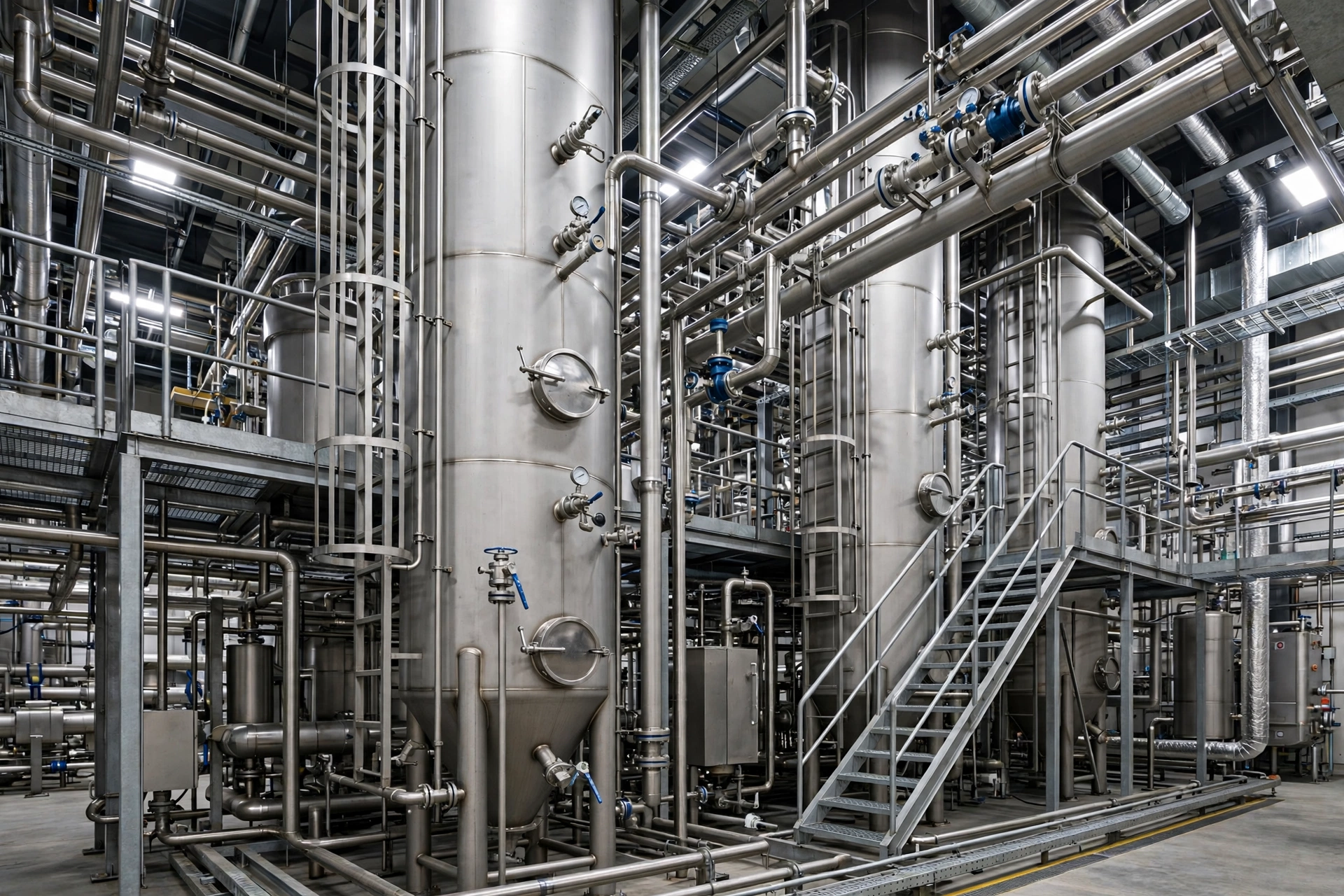
The first minutes after a power failure decide whether an edible oil refinery has a production problem or a safety incident. The automatic transfer switch is the clock. NFPA 110 allows 10 seconds for emergency power; a well-set refinery ATS transfers in 5–10 seconds. Those seconds are the gap the plant’s safety systems must survive, and the minutes after them are the window in which the generator must take the load. Three machines define the window.
The Extractor
The extractor is a long vessel — rotary, belt or loop type — full of flakes and hexane at 50–60°C. When power fails, the extractor stops with a full charge inside it. The flakes are wet with hexane, and the vessel is warm. Nothing explodes in the first minute. The risk is what stops with the power: the forced ventilation that keeps the building below the lower explosive limit, the gas detectors that report hexane in air, and the cooling water that keeps the condensers condensing. A plant that loses ventilation for more than a few minutes in a warm extraction building is accumulating vapour in a room full of hot surfaces. The generator’s first job is to restart the ventilation and the detection, not the extractor itself. The extractor can wait an hour. The air in the building cannot.
The Desolventizer-Toaster
The DTDC is the most dangerous machine in the plant to stop badly. It holds a bed of flakes at 100–110°C, wet with hexane, with live steam sparging through it. The steam strips the hexane out and toasts the meal. When the power fails, the steam valves close, the agitator stops, and the bed sits. The flakes at the bottom of the bed continue to give off hexane vapour with no steam to carry it away and no agitator to keep the bed moving. If the meal then sits long enough to cool below the temperature at which the residual solvent stays mobile, the meal has to be reprocessed — and the hexane trapped in it has to be accounted for before the DTDC is opened. The restart procedure after a long stop is a full safety check: gas test the vessel, verify the steam supply, confirm the condenser is running, and only then restart the agitator. A plant that restarts the DTDC agitator before the steam and ventilation are back is the plant that has the incident.
The Deodorizer
The deodorizer is the hottest vessel in the plant, and it fails on temperature rather than vapour. At 220–270°C under a vacuum of a few millibar, the oil is stripped by steam. When the power fails, the vacuum pumps stop, the vacuum breaks, and the oil sits at temperature in air. Hot oil in air oxidizes. The peroxide value climbs, the colour darkens, and the batch degrades with every hour it sits. The heating system matters here too: a deodorizer heated by a thermal-oil loop keeps its heat for a while after the power fails, which is both a help and a hazard — the oil stays hot longer, so it degrades longer, unless the generator restarts the circulation pumps and the vacuum system. The deodorizer’s own section later in this article works through the restart in full, because the restart is where the money is lost.
Three Edible Oil Plants That Lost Power — and What They Teach
Case 1: Rosario, Argentina — A 3,000-Tonne Crush Plant and a 40-Minute Grid Fault
A soybean crushing plant outside Rosario, in Argentina’s Santa Fe province, crushes 3,000 tonnes a day. The plant’s average electrical load is about 3,500 kW, and its essential-load generator is a paralleled pair of 1,250 kVA sets. In 2019 the grid faulted during a summer storm, and the plant was without mains power for 40 minutes.
The transfer worked as designed. The ATS moved in 8 seconds, the two sets started and paralleled, and the essential board took the load: extraction ventilation, the DTDC steam controls, the condenser cooling water, the boiler feed pumps and the control room. Production stopped — the flaking mills and the main conveyors were shed — but the extraction building stayed ventilated and the DTDC bed stayed hot and moving.
The lesson was in the fuel. The two sets at 75% load burn roughly 380 litres an hour between them. The plant’s day tank held 2,000 litres, good for about five hours, and the bulk tank held 20,000 litres. The outage lasted 40 minutes and burned about 250 litres. The plant’s manager later said the five-hour day tank was the right size for a fault like that one, and the wrong size for the 14-hour outage the same province saw the following year. The plant now keeps its bulk tank above 60% through the storm season, and the generator’s fuel level is on the same daily checklist as the hexane inventory.
Case 2: Kano, Nigeria — A 200-Tonne Refinery and a Deodorizer at 240°C
A 200-tonne-per-day refinery in Kano, northern Nigeria, refines crude soybean and groundnut oil for the local market. The plant’s generator is a 500 kVA standby set, sized for the whole refinery. The grid in Kano is unreliable, and the plant expects several outages a week.
One evening the grid failed with the deodorizer at 240°C, holding 25 tonnes of oil mid-batch. The ATS transferred in 9 seconds and the set took the load, but the deodorizer vacuum pumps were on a circuit the electrician had wired to the non-essential board during a modification two years earlier. The set ran. The centrifuges ran. The vacuum pumps did not.
The batch sat at temperature without vacuum for six hours while the crew found the wiring fault and moved the circuit. The oil darkened two Lovibond red units and the peroxide value rose past the plant’s internal limit. The batch was not lost — it was re-bleached and re-deodorized, at the cost of a day’s production and the extra bleaching earth and steam. The plant’s fix cost less than the batch: the vacuum pumps, the thermal-oil circulation pumps and the deodorizer controls are now on a labelled essential board, tested monthly, and the modification log is signed by the plant manager. The case is a reminder that a generator only protects the loads that are actually wired to it.
Case 3: Indore, India — A 500-Tonne Plant and an 11-Hour Monsoon Outage
A 500-tonne-per-day crush and refinery in Indore, Madhya Pradesh, runs 300 days a year on soybeans from the surrounding districts. The plant’s essential-load generator is a 750 kVA set with a 5,000-litre bulk tank. During the 2023 monsoon, a fallen transmission tower cut the plant off for 11 hours.
The set started in 7 seconds and carried the essential board for the full 11 hours: extraction ventilation, DTDC controls, condenser cooling water, boiler feed pumps, the tank farm and the laboratory. The crew drained the extractor to a safe state in the first hour, then held the DTDC hot on steam from the boiler. Fuel burn averaged 105 litres an hour, and the outage consumed about 1,150 litres — well inside the bulk tank, with 3,850 litres still in hand when the grid returned.
The restart took 9 hours. The extractor was gas-tested, the DTDC was re-steamed and the meal checked for residual hexane, the deodorizer was brought back to temperature under vacuum before the next batch was charged, and the first 50 tonnes of oil were held for laboratory testing before release. Total lost production was one day’s crush, about 500 tonnes of seed, against a plant that crushes 150,000 tonnes a year. The plant’s owner later said the 11-hour outage cost him a day. The plant 40 kilometres away, which had a smaller set and no bulk tank, lost three days — one to the outage, two to the restart.
Deodorizer Restart: The Batch Nobody Budgets For
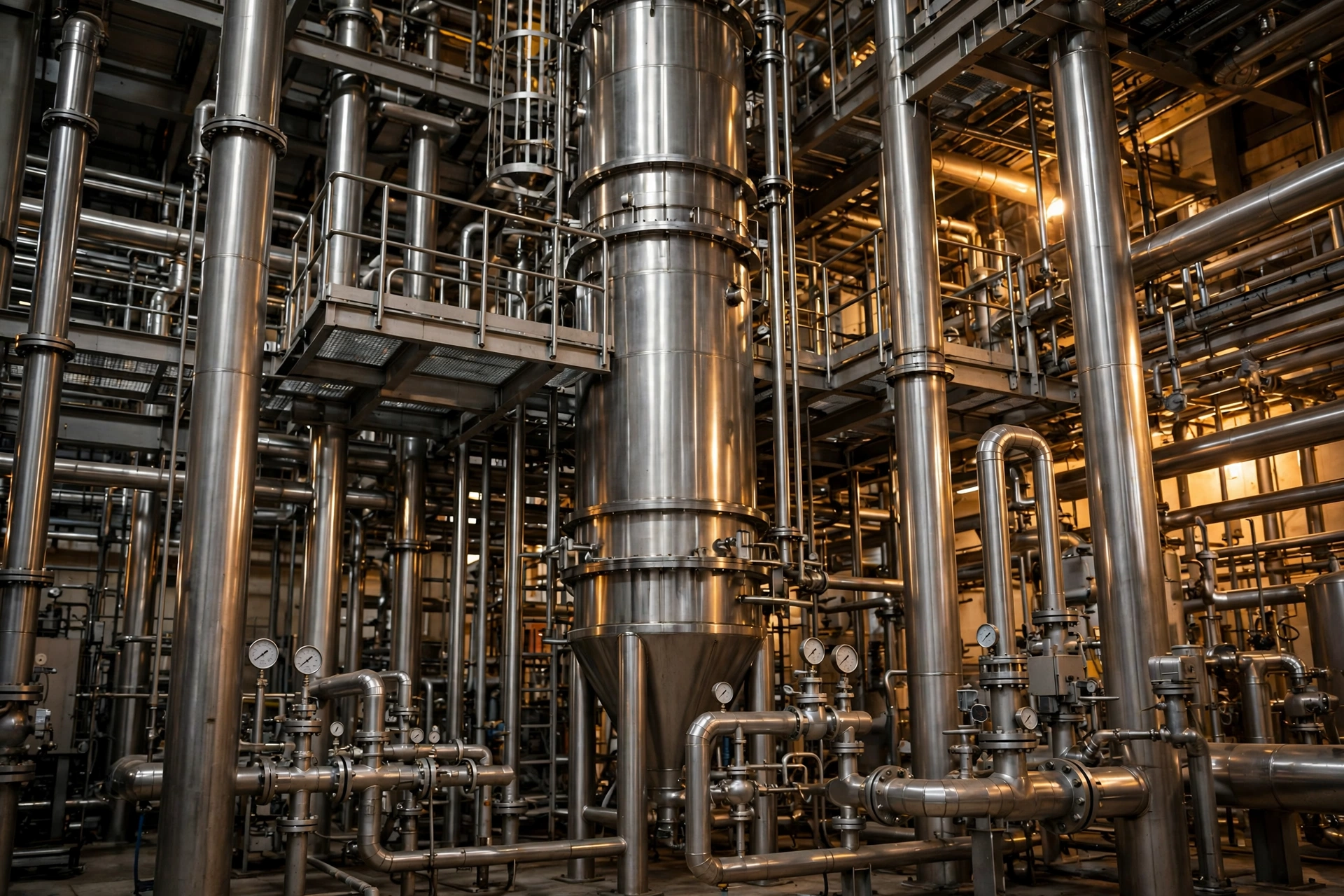
The deodorizer restart is the most expensive hour in an edible oil refinery, and it is the hour nobody budgets for. The reason is simple: a deodorizer is not a tank that can be switched off. It is a vessel holding tens of tonnes of oil at 220–270°C under deep vacuum, and everything about its restart depends on what happened to that oil while the power was out.
The first question is how long the oil sat. Under an hour, with the vacuum restored quickly and the temperature held, the batch usually survives with a modest rise in peroxide value and a check of colour and free fatty acids. The plant’s laboratory tests the batch before it is released, and a batch that passes goes to the tank farm like any other. Between one and six hours, the oil darkens and the peroxide value climbs, and the batch often needs re-bleaching and a second deodorization pass. Beyond six hours at temperature without vacuum, the batch is usually downgraded — sold as technical oil, or reprocessed at a loss. The exact threshold depends on the oil: soybean oil oxidizes faster than palm olein, and oil with a high free fatty acid content degrades faster than oil that was well neutralized.
The second question is the vacuum. A deodorizer that loses its vacuum pumps loses its vacuum in minutes, and the oil is then sitting at 250°C in air. The restart sequence is therefore fixed: restore the thermal-oil circulation first, so the vessel heats evenly; restart the vacuum pumps second, and hold the vessel under vacuum for at least 30 minutes before the temperature is raised; only then charge the next batch. A plant that raises the temperature before the vacuum is established is heating oil in air, and the oil will show it in the laboratory.
The third question is the steam. Deodorization strips with steam — typically 150–250 kg of steam per tonne of oil in a small unit, less in a large continuous plant with heat recovery. If the boiler is down, there is no stripping steam, and the deodorizer cannot run even if the generator is running. The generator must therefore carry the boiler’s feed pumps and forced-draught fan, and the boiler must have its own fuel. A refinery that buys a generator and forgets the boiler has bought half a backup system.
The cost of getting this wrong is easy to state. A 25-tonne deodorizer batch of refined soybean oil, at roughly $900–1,100 a tonne, is worth $22,500–27,500. A batch downgraded to technical oil loses 20–30% of that value. A batch that has to be re-bleached and re-deodorized costs a day of the refinery’s time, the extra bleaching earth at 0.5–2% of the batch weight, and the steam. Against those numbers, a vacuum pump on the essential board and a monthly test of the deodorizer restart procedure are cheap insurance.
Fuel Autonomy and Running Cost: How Long It Runs and What It Burns
Fuel autonomy is the second half of the generator decision, and it is the half most often under-budgeted. A set that starts perfectly and runs out of fuel in six hours has failed at hour seven. The arithmetic is straightforward: tank size divided by fuel burn at the load the set actually carries.
| Set size (prime) | Full-load fuel use | 75% load fuel use | 1,000 L tank | 5,000 L bulk tank |
|---|---|---|---|---|
| 250 kVA / 200 kW | ~48 L/h | ~38 L/h | 21 h | 105 h |
| 500 kVA / 400 kW | ~93 L/h | ~70 L/h | 11 h | 50 h |
| 750 kVA / 600 kW | ~140 L/h | ~105 L/h | 7 h | 34 h |
| 1,000 kVA / 800 kW | ~185 L/h | ~140 L/h | 5 h | 25 h |
| 1,500 kVA / 1,200 kW | ~275 L/h | ~205 L/h | 3 h | 17 h |
The 500 kVA figures are from the Cummins C500D5 datasheet — 500 kVA standby / 455 kVA prime, burning 93.2 L/h at full prime load, 69.9 L/h at 75%, 49.0 L/h at 50% and 29.2 L/h at 25%. The larger figures scale from the same specific consumption, about 0.23 litres per kWh at full load. A 750 kVA set at 75% load burns about 105 litres an hour, which is the figure the Indore plant measured during its 11-hour outage.
Three rules follow from the table. First, the day tank is for starting and for short faults, not for outages: a 1,000-litre day tank on a 1,000 kVA set is five hours at 75% load. Second, the bulk tank is the outage plan: a 5,000-litre tank gives a 750 kVA set 34 hours at 75% load, which covers a two-day outage with margin. Third, diesel fuel ageing matters more in a refinery than in most industries, because the set may sit for months between outages and then be asked to run for days. Fuel in a warm plant, in a tank that breathes, grows water and microbes. A refinery that tests its fuel twice a year and polishes it when the water bottom rises is a refinery whose generator starts on the day it matters.
Running cost is the other side of the same arithmetic. At a delivered diesel price of $1.00–1.30 a litre in most export markets, a 750 kVA set at 75% load costs $105–137 an hour in fuel alone. An 11-hour outage costs $1,155–1,500 in fuel. A 24-hour outage costs $2,520–3,290. Against a day’s crush of 500 tonnes of seed — worth roughly $200,000 in meal and oil at current prices — the fuel is a rounding error. The expensive fuel is the fuel that was not bought: the day the plant had no generator and lost three days of production.
The maintenance schedule decides whether the set is there when the grid fails. A standby set in a refinery should be tested monthly under load, not on no-load, and the test should include the transfer: the ATS, the essential board, the ventilation fans and the vacuum pumps. A test that starts the engine and stops there proves the engine starts. It proves nothing about the deodorizer vacuum pumps, which is the lesson of the Kano case.
Frequently Asked Questions
What size generator does an edible oil refinery need?
A 100 t/day soybean crush and refinery needs a 150–250 kVA set, a 300 t/day plant needs 400–600 kVA, and a 1,000 t/day plant needs 750–1,250 kVA for its essential loads. The set covers extraction safety, the deodorizer hold, the boiler and the tank farm — not the full production load of a large plant, which runs to several megawatts.
Do edible oil refineries need a backup generator?
Yes. The crushing half needs one for safety — hexane extraction without ventilation and gas detection is a hazardous-area risk — and the refining half needs one for temperature, because a deodorizer at 250°C without vacuum degrades its batch within hours. A refinery without a generator loses production in every outage and risks its solvent inventory and its oil quality.
How long can an edible oil refinery run on a generator?
As long as the fuel lasts. A 750 kVA set at 75% load burns about 105 litres an hour, so a 5,000-litre bulk tank gives roughly 34 hours. The practical limit is fuel logistics and the boiler’s fuel, not the engine: a set rated standby can run for days if the fuel and the service plan are in place, and the plant should contract a fuel delivery before the tank runs low.
What happens to an edible oil refinery during a power outage?
Production stops, and the plant goes to a safe state. The extractor is drained or held, the DTDC bed is kept hot on steam, the deodorizer holds its batch under vacuum if the generator restarts the vacuum pumps, and the boiler keeps steam available. The restart takes 6–12 hours for a mid-size plant: gas testing, re-steaming, laboratory checks and a held first batch.
Can a diesel generator power an edible oil refinery?
Yes, for its essential loads. Below about 300 t/day a single set can carry the whole plant. Above 1,000 t/day the generator covers the critical slice — extraction safety, deodorizer hold, boiler, tank farm and controls — while production waits for the grid. A 22,000 t/day single line draws about 23 MW, which no practical number of diesel sets can carry.
Specification Checklist
1. What is the crush capacity in tonnes per day, and what is the oil output? The seed figure sizes the crushing load; the oil figure sizes the refining load. A quotation that asks only for kVA has not understood the plant.
2. Which rating is quoted — ESP, PRP or COP? The letters must appear on the datasheet and the contract. A refinery set is almost always standby-rated for its transfer duty, with the fuel plan built for long outages.
3. Is the extraction building’s ventilation and gas detection on the essential board? If the answer is not a documented yes, the generator does not protect the plant’s largest safety risk.
4. Are the deodorizer vacuum pumps, thermal-oil circulation pumps and boiler feed pumps on the essential board? The Kano case is the warning: a generator only protects the loads wired to it.
5. What is the starting sequence for the largest motors? Flaking mills, DTDC agitators, centrifuges and induced-draught fans must start in sequence, with soft starters on the largest drives. Starting them together trips a correctly sized set.
6. How big is the day tank, and how big is the bulk tank? A 1,000-litre day tank on a 1,000 kVA set is five hours at 75% load. The bulk tank is the outage plan, and the fuel delivery contract is part of it.
7. What is the hexane inventory and the classified-area rating of the extraction building? The generator enclosure, the cable routes and the ATS location must respect the hazardous-area classification. A set parked inside a Zone 2 area without certification is a hazard, not a backup.
8. Will the warranty stand at the stated duty and site conditions? Ask in writing, with the rating letters, the altitude, the maximum temperature and the annual hours attached. A direct answer is worth more than a 5% discount. A vague answer is a warning.
9. What does the deodorizer restart procedure require, and is it tested? The restart — gas test, re-steam, vacuum hold, laboratory check — should be written down and tested monthly, with the vacuum pumps included in the load test.
An edible oil refinery is a plant that turns a flammable solvent and a 250°C vessel into food. The generator is the machine that keeps both halves safe when the grid fails. Size it from the seed, wire the safety loads to it, keep the fuel fresh and the bulk tank full, and test the transfer with the deodorizer in the loop. The price on a quotation states what a generator costs today. The rating and the essential board decide whether the plant still owns a useful asset — and a saleable batch of oil — after the next outage. For a quotation sized to a specific crush capacity, refinery layout and site conditions, contact PAVO.